


Many organizations treat a healthcare compliance program as a routine obligation. I understand why. It often shows up as policies, audits, and training that feel disconnected from day-to-day work. But small compliance gaps do not stay small.
The proposed overhaul to the HIPAA Security Rule, published in January 2025, was expected to finalize in 2026, but HHS pushed the target to July 2027 and moved it to its “Long-Term Actions” agenda, meaning no near-term finalization is expected. The current Security Rule remains in force in the meantime, and OCR continues to cite failure to conduct a proper risk analysis as the most common deficiency in its enforcement actions, so the margin for error is shrinking under the existing rule, not because of a new one.
Enforcement trends reinforce this shift.
According to the U.S. Department of Justice, federal investigators charged 324 individuals in its June 2025 National Health Care Fraud Takedown, the largest in DOJ history at the time, totaling over $14.6 billion in alleged fraud tied largely to billing abuse and weak oversight. A subsequent 2026 takedown charged 455 individuals across a similar range of schemes, so this kind of enforcement activity isn’t a one-time event, it’s now an annual pattern.
Compliance can no longer be an administrative afterthought. It must translate into everyday decisions, especially when teams are under real pressure.
This guide is for you if you are:
- Responsible for building or improving a healthcare compliance program
- Managing a hospital compliance program or compliance efforts across multiple facilities
- Overseeing healthcare compliance policies and procedures and seeing low adoption
- Handling compliance training for healthcare staff and want it to be practical, not forgettable
- Trying to meet healthcare compliance training requirements without overwhelming your teams
Why Most Healthcare Compliance Programs Break Down?
When I look at why so many efforts fail, it’s rarely because teams don’t care. The issue is that healthcare compliance management is often designed on paper, not around how work actually happens in hospitals and clinics. Everything may look fine during planning, but problems surface once policies meet real workflows.
1. Compliance Feels Expensive Before It Feels Useful
Many organizations underestimate the effort required to build a reliable healthcare compliance program. Legal reviews, documentation, training, and oversight demand time and money long before any value feels visible. That early pressure leads to shortcuts, which later turn into far bigger compliance risks.
2. Policies Exist, but Behavior Doesn’t Change
Teams spend weeks writing healthcare compliance policies and procedures, yet those rules don’t always show up in daily decisions. Under time pressure, staff fall back on habits or informal guidance, creating exposure even when policies technically exist.
3. Compliance Training Doesn’t Stick
Much of today’s compliance training for healthcare is still delivered as passive, one-time sessions. People complete it, check the box, and quickly forget most of it. Research consistently shows that this approach has little impact on real-world behavior, especially in high-pressure healthcare environments where staff rely on habits, not memory, to guide their actions.
4. Training Requirements Ignore Role-Based Risk
Healthcare compliance training requirements are often applied uniformly, even though risks vary widely by role. Clinicians, administrative staff, and IT teams face different compliance scenarios, but training rarely reflects those differences, making it harder for employees to apply what they learn.
5. Scale Breaks What Works for Smaller Teams
What works for a small practice often collapses inside a large hospital compliance program. As teams grow and systems multiply, tracking training, updating policies, and proving compliance becomes increasingly difficult without more structure.
Across all of these issues, the pattern is the same. Compliance rarely fails because rules are missing. It fails when organizations struggle to turn those rules into consistent, everyday behavior.
Core Features of a High-Functioning Healthcare Compliance Program
A healthcare compliance program that actually works looks very different from one that simply exists on paper. The strongest programs focus less on volume and more on structure. They prioritize fundamentals, reinforce behavior through training, and make compliance easier to follow than to ignore.
These features aren’t just good instincts, they map directly onto the HHS Office of Inspector General’s General Compliance Program Guidance (GCPG), updated November 2023, the government’s own framework for what an effective healthcare compliance program looks like. OIG names seven elements: written policies and procedures, compliance leadership and oversight, training and education, effective communication channels with the compliance officer, enforcement of standards, risk assessment and auditing, and response to detected offenses. It’s voluntary, not a legal mandate, but DOJ and OIG both use it as the lens for evaluating a program during an actual investigation, so building around it isn’t just best practice, it’s what “well designed” gets measured against if something goes wrong.
1. The “Unsexy” Fundamentals Come First
Every effective program starts with the basics that rarely get attention but carry the most weight. Data minimization, role-based access, encryption at rest, and detailed audit logs form the backbone of healthcare compliance management. Without these in place, even the best policies and training efforts are fragile. Regulators continue to penalize organizations not for lacking innovation, but for failing to implement and monitor these core safeguards consistently
2. Clear Ownership and Accountability
High-functioning programs establish clear responsibility for compliance oversight. Whether this sits with a Healthcare Compliance Officer or a committee, accountability cannot be fragmented. Strong compliance programs for healthcare providers ensure compliance leadership has visibility across clinical, administrative, and IT functions so risks are identified early instead of during audits.
3. Policies That Reflect Real Work
Well-written healthcare compliance policies and procedures are specific, practical, and tied to actual workflows. Generic templates may satisfy documentation needs, but they fail when staff cannot see how rules apply to their role. Effective programs regularly review and update policies to reflect new regulations, operational changes, and emerging risks.
4. Training That Reinforces Behavior, Not Just Awareness
Training is where many programs succeed or fail. Effective compliance training for healthcare moves beyond passive instruction and focuses on real-world decision-making. Scenario-based and role-specific training has been shown to improve retention and reduce risky behavior compared to traditional click-through models. This approach helps staff recognize compliance issues in the moment, not weeks later.
5. Consistent Tracking and Documentation
Meeting healthcare compliance training requirements is not just about delivering training. It’s about proving that it happened. High-performing programs rely on centralized systems to track participation, acknowledgments, and updates over time. This creates audit-ready records and reduces the scramble when regulators or partners ask for proof.
6. Ongoing Monitoring Instead of Annual Checkpoints
Strong programs treat compliance as an ongoing process. Regular reviews, internal audits, and monitoring help catch issues early. This approach is especially critical in a hospital compliance program, where scale and complexity increase the likelihood of small issues turning into systemic problems.
A workable cadence: monthly access-log spot checks, quarterly policy relevance reviews (does this still reflect how the team actually works), and a full annual risk assessment aligned to the OIG’s GCPG recommendation above. Treat the annual assessment as the one that catches what the smaller, more frequent checks miss, not as the only checkpoint in the system.
At its core, a high-functioning healthcare compliance program is designed to support people, not overwhelm them. When fundamentals, policies, training, and tracking work together, compliance becomes part of daily operations instead of a constant fire drill.
Steps to Build Your Healthcare Compliance Program
This is where strategy turns into execution. A healthcare compliance program only works when plans are translated into systems, habits, and accountability that hold up under real-world pressure.
Start With Compliance, Not Features
One of the biggest mistakes I see is treating compliance as a later phase. In reality, it shapes everything that comes after. For many healthcare initiatives, much of the effort and budget is spent on compliance, governance, training, and security, often limiting how much goes into functional features. Planning for this early helps avoid costly redesigns down the line.
The “Build vs. Buy” Decision
Every organization has to decide how much to handle internally and where to lean on external support.
If you build, you take ownership of internal policies, compliance awareness training, infrastructure security, and documentation. This approach can reduce vendor dependency, but it increases internal workload, especially around training delivery, tracking, and recordkeeping.
If you buy, you rely on compliance-ready infrastructure, security tooling, or automation services to reduce the effort of building safeguards from scratch. These tools can speed things up, but they do not remove the need for consistent training, clear policies, and proof that requirements are being met.
Where Most Programs Break Down
No matter which approach you choose, most compliance programs fail at execution. Policies alone do not protect you. They only work when employees understand what’s expected, acknowledge those expectations, and apply them consistently in their day-to-day work.
Why a Centralized Training System Matters
This is where a learning management system becomes a compliance control, not just a training tool. A centralized LMS helps healthcare organizations:
- Deliver role-based compliance training
- Track completion and acknowledgments automatically
- Maintain audit-ready records
- Update training quickly when regulations change
Without this structure, training quickly becomes inconsistent and difficult to defend during audits.
Use a Structured Checklist
A strong program relies on clear checkpoints. Follow a structured checklist that covers session timeouts, access controls, password security, breach response, audit logs, and documentation practices. Checklists help ensure nothing critical slips through the cracks.
| Role | Core Training Focus | Review Cadence |
|---|---|---|
| Clinical staff | PHI handling in patient care, documentation accuracy, informed consent | Annual + role change |
| Administrative/billing | FCA and Anti-Kickback exposure, accurate coding, minimum-necessary access | Annual |
| IT/security | Access controls, encryption, breach response, audit log review | Annual + system change |
| Remote/telehealth staff | Platform-specific BAA compliance, device and network security | Annual + platform change |
| PRN/contract staff | Same core PHI training as employees, tracked identically | At engagement + annual |
Hire Specialized Experts Early
If internal expertise is limited, it’s far better to bring in compliance consultants or regulatory attorneys early. Doing so helps you address gaps before they turn into costly violations or last-minute audit failures.
The goal isn’t to build the perfect system on day one. It’s to build a compliance program that is practical, defensible, and able to scale as your organization grows.
Distinguishing Between Healthcare Compliance Branches
One reason a healthcare compliance program feels overwhelming is that compliance is often treated as one big bucket. In reality, it spans multiple areas, each with its own risks, rules, and training needs. When these are mixed together, important gaps get missed.
Corporate Compliance
Corporate compliance focuses on how the organization operates as a business. This includes billing practices, fraud prevention, financial relationships, and ethical standards. In both clinics and a larger hospital compliance program, this area is closely tied to audits and regulatory scrutiny. Teams responsible for corporate compliance need clear policies, regular oversight, and training that helps them recognize issues before they turn into violations.
Clinical Compliance
Clinical compliance centers on patient care, documentation accuracy, and adherence to clinical standards. This branch ensures that care is medically appropriate, properly recorded, and aligned with regulatory expectations. For many compliance programs for healthcare providers, clinical compliance is where policies most directly affect daily work, which is why training must be practical and role-specific rather than purely administrative.
To make these expectations actionable, reinforce medical chart abstraction with standardized workflows. Teams that adopt healthcare data abstraction processes covering metric definitions, source identification, reviewer training, QA checks, and EHR-to-manual reconciliation reduce documentation errors, strengthen quality reporting, and ensure audit-ready clinical records.
IT and Data Security Compliance
This branch focuses on protecting patient data and maintaining secure systems. It covers access controls, system safeguards, incident response, and ongoing risk assessments. Strong healthcare compliance management depends on close coordination between IT, compliance, and operations, especially as digital tools and remote care become more common.
Telehealth, Remote, and Contract Staff Compliance
Three groups don’t fit neatly into the branches above, and each carries its own compliance exposure.
Telehealth stopped being a pandemic-era exception in August 2023, when OCR’s COVID-related HIPAA enforcement leniency for telehealth ended. Any platform used for virtual visits now needs a signed business associate agreement and full encryption, the same as any other system touching PHI. Separately, DEA flexibilities that let providers prescribe controlled substances via telemedicine without a prior in-person visit are currently extended only through December 31, 2026, worth tracking closely if your organization prescribes controlled substances virtually, since this has been renewed on a rolling basis rather than made permanent.
Remote staff handling PHI from home need the same access controls as anyone on-site: encrypted connections, no PHI on personal devices, and a private physical space where screens and calls can’t be seen or overheard by others in the household.
PRN and contract staff are still “workforce members” under HIPAA if they have any access to PHI, which means they need the same training and the same signed acknowledgment as full-time employees, tracked the same way. If your organization treats PRN staff as exempt from standard onboarding compliance steps because they’re not full-time, that’s a documentation gap waiting to surface in an audit.
Why These Branches Must Work Together
Each branch addresses a different type of risk, but they cannot operate in isolation. Policies, training, and monitoring need to align across corporate, clinical, and IT functions. When they don’t, organizations end up with duplicated effort in some areas and blind spots in others.
Understanding these branches helps you design training, policies, and oversight that actually fit your organization, instead of forcing everything into a single, ineffective framework.
Healthcare Compliance Examples: What Compliance Looks Like in Practice
A healthcare compliance program is shaped by specific laws and regulations issued by governing bodies. Each one addresses a different type of risk, from patient data protection to billing integrity and workplace safety. Understanding these examples helps clarify what compliance actually involves on the ground.
HIPAA Compliance and Security
HIPAA is one of the most widely recognized healthcare regulations in the United States. Its primary goal is to protect the privacy and security of patient health information. Under HIPAA, healthcare organizations are responsible for safeguarding sensitive medical data against unauthorized access, loss, or disclosure. Compliance goes beyond technology controls and includes employee training, access management, and clear procedures for handling patient information.
Watch: What is HIPAA Compliance & Why Does It Matter?
Food and Drug Administration (FDA) Requirements
FDA compliance ensures the safety and effectiveness of prescription drugs, vaccines, medical devices, and dietary supplements. Healthcare providers must follow FDA guidelines when administering treatments, managing devices, and documenting usage. Failure to comply can impact patient safety and expose organizations to serious regulatory action.
Drug Enforcement Administration (DEA) Regulations
DEA regulations focus on the handling of controlled substances. Healthcare organizations must follow strict rules for prescribing, storing, documenting, and disposing of these substances. This makes DEA compliance a critical part of corporate compliance in healthcare, particularly for hospitals, clinics, and pharmacies where medication management is part of daily operations.
Watch: How to Establish a Drug-Free Workplace
False Claims Act (FCA)
The False Claims Act targets fraud involving government healthcare programs. Submitting inaccurate billing information or misrepresenting services can result in significant penalties. For healthcare providers, FCA compliance reinforces the importance of accurate documentation, ethical billing practices, and internal oversight.
OSHA and Workplace Safety Compliance
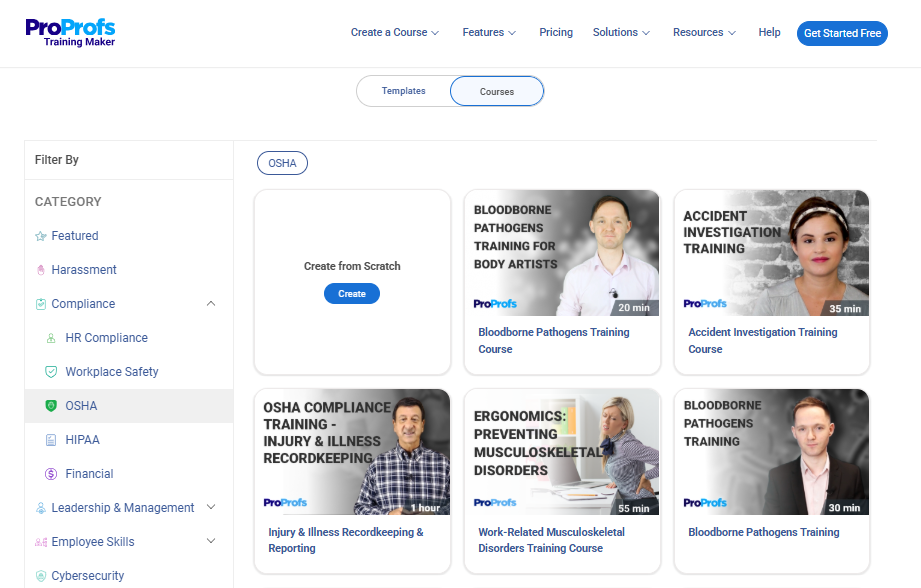
OSHA regulations apply to healthcare settings just as much as they do to other industries. They cover risks such as bloodborne pathogens, hazardous drug exposure, ergonomic strain, laboratory hazards, and radiation exposure. OSHA compliance is essential for maintaining a safe working environment in hospitals, clinics, nursing homes, and diagnostic facilities.
Anti-Kickback Statute (AKS)
The Anti-Kickback Statute prohibits offering or receiving anything of value in exchange for referrals tied to federal healthcare programs. This law is designed to prevent conflicts of interest and protect patient decision-making. Compliance here relies heavily on training, awareness, and clear boundaries around financial relationships.
Case Study: Enabling Agile Compliance Training at Health First
As Health First Health Plans grew, managing training and surveys became increasingly difficult. Even minor updates required coordination with the marketing team, which slowed things down and created bottlenecks. In a healthcare environment where information needs to stay current, those delays made it harder to respond quickly to changing requirements.
As Jennifer Cole, Sales Integration Specialist at Health First Health Plans, put it, the challenge wasn’t just managing training, but responding quickly when requirements changed. Making real-time updates to courses or adjusting data collection fields often took longer than it should have, slowing down internal workflows.
To address this, the team adopted ProProfs Training Maker to centralize training and surveys in one system. This allowed non-technical staff to make real-time updates on their own, keep training content current, and maintain clearer records without relying on other teams.
For organizations managing ongoing compliance and training demands, the takeaway is practical. When requirements evolve, the ability to update training quickly and keep records organized reduces friction and makes compliance easier to sustain.
Compliance as a Competitive Advantage
Here’s the part that often gets overlooked. A well-built healthcare compliance program is not just about avoiding penalties. When done right, it becomes a competitive advantage. It builds trust with patients, partners, and regulators, reduces operational risk, and makes it more challenging for less-prepared competitors to keep pace.
What I’ve seen work best are programs that respect people’s time. They reduce friction during high-pressure moments, rather than adding to it. They focus less on how things look and more on protecting patient data, supporting informed decisions, and clearly communicating expectations when it matters most.
The most sustainable programs don’t treat compliance as an annual event. They treat training, monitoring, and documentation as systems that run continuously in the background. When that happens, compliance stops feeling like a burden and starts working quietly in your favor.

Let ProProfs AI create your training course

 We'd love your feedback!
What did you like & how can we make it even better?
 Thanks for your feedback!
 Ask Your Question
Have a question? Get expert help to make your decision easier.