If you manage training for a hotel, resort, or restaurant chain, you already know the problem. Staff turnover is relentless. A new front desk agent starts on Monday and is expected to deliver on-brand guest service by Friday.
Your housekeeping team spans three languages. Your F&B crew changes every quarter. And somewhere in the background, OSHA and food safety compliance deadlines are ticking. Trying to run all of that through classroom sessions, printed manuals, or a generic corporate LMS is a losing battle.
The right hospitality LMS changes this completely. It gets new hires floor-ready fast, keeps compliance airtight, and gives you the tracking visibility you have been flying without.
What Is a Hospitality LMS?
Unlike a generic corporate LMS, a hospitality-specific platform is designed around the realities of your workforce: deskless workers without a fixed computer, high seasonal turnover, multilingual teams, and the constant pressure to deliver consistent guest experiences across every property.
Here is why it matters for your operation:
- Slashes onboarding time: Gets new hires trained and floor-ready in days, not weeks, reducing the cost of the revolving door
- Standardizes service quality: Every employee at every location follows the same training, so your brand promise does not depend on which manager did the onboarding
- Automates compliance tracking: No more chasing certificates or manually logging who completed what. OSHA, HACCP, food safety, alcohol service laws, all tracked automatically
- Works on any device, anywhere: Mobile-first design means your housekeeping team, servers, and front desk staff can train on their own phones during quiet moments between shifts
- Supports multilingual workforces: Delivers training in 70+ languages so literacy barriers do not become training barriers
- Gives you real data: Live dashboards and audit-ready reports show exactly who has completed what, where gaps exist, and which training is actually improving performance
10 Best Hospitality LMS Platforms
I pulled this list together based on hands-on experience, peer feedback from hospitality training managers, and reviews across G2 and Capterra.
Each platform here solves a specific problem that comes up in real hospitality environments. No tool is perfect for everyone, which is why I have been specific about what each one actually does well.
| Platform | Best For | Starting Price | User Rating (Capterra) |
| ProProfs Training Maker | AI-powered training and compliance | Free for up to 10 learners; paid from $1.99/learner/month | 4.8/5 |
| SalesBoost | Skill-based and sales training | From $48/License/Month | 5.0/5 (3 reviews) |
| Cornerstone on Demand | Virtual and instructor-led training | From $6/user/month | 4.3/5 |
| Docebo | AI-powered personalization at scale | Custom Quote | 4.4/5 |
| AbsorbLMS | Learner engagement and mobile training | Custom Quote | 4.5/5 |
| Green LMS | Social and peer learning | Custom Quote | – |
| Seek LMS | Course management and content organization | Custom Quote | – |
| TalentLMS | Scalable training for multi-location businesses | From $119/month | 4.7/5 |
| iSpring Learn | Fast course creation from existing materials | From $720/author/year | 4.7/5 |
| 360Learning | Peer-Led Training in Service Teams | From $8/user/month | 4.7/5 |
1. ProProfs Training Maker: Best for Easy AI-Powered Training Development and Compliance
I started using ProProfs Training Maker when we needed to get a seasonal team of 40 staff trained in under a week before a property opening. What I did not expect was how fast the course creation actually was.
I typed the topic, the AI built a full training program, and I was editing it within minutes instead of starting from scratch. That speed completely changed what was possible. You can try it out here:

Let ProProfs AI create your training course
For compliance, it is the most reliable system I have worked with. Expert-built 500+ editable courses covering OSHA, FDA, fire safety, and fatigue management are already in the library. I set up automated reminders for certification expiry dates, and the system handles the follow-ups.
No more chasing staff manually or discovering compliance gaps during an audit. The reporting dashboard shows completions in real time, so I always know exactly where each team member stands.
Mobile access meant my front desk and F&B teams could train on their phones during downtime, and the 70+ language support removed the barrier I had with our non-English-speaking housekeeping staff entirely.
Pros:
- AI course creation cuts build time from days to minutes, ideal for fast onboarding cycles
- 500+ expert-made courses with topics from compliance to customer service, ready to deploy instantly
- Mobile LMS supports 70+ languages, so deskless and multilingual teams are covered
- Automated reminders and certification tracking keep compliance airtight without manual effort
- Detailed reports, audit trails, and grade books make regulatory recordkeeping effortless
Cons:
- No on-premise setup, so it requires a reliable internet connection
- No dark mode, which some learners on night shifts have flagged
User Rating: 4.8/5 (Capterra)
Pricing: Forever free for up to 10 learners. Paid plans start at $1.99/learner/month, billed annually.
2. SalesBoost: Best for Skill-Based and Sales Training
I brought SalesBoost into a hotel sales team that was technically competent but losing deals because the customer conversations felt flat. What makes this platform different is the voice technology. Staff practice actual sales pitches and upselling conversations out loud, and the system gives them instant coaching feedback on what they said and how they said it.
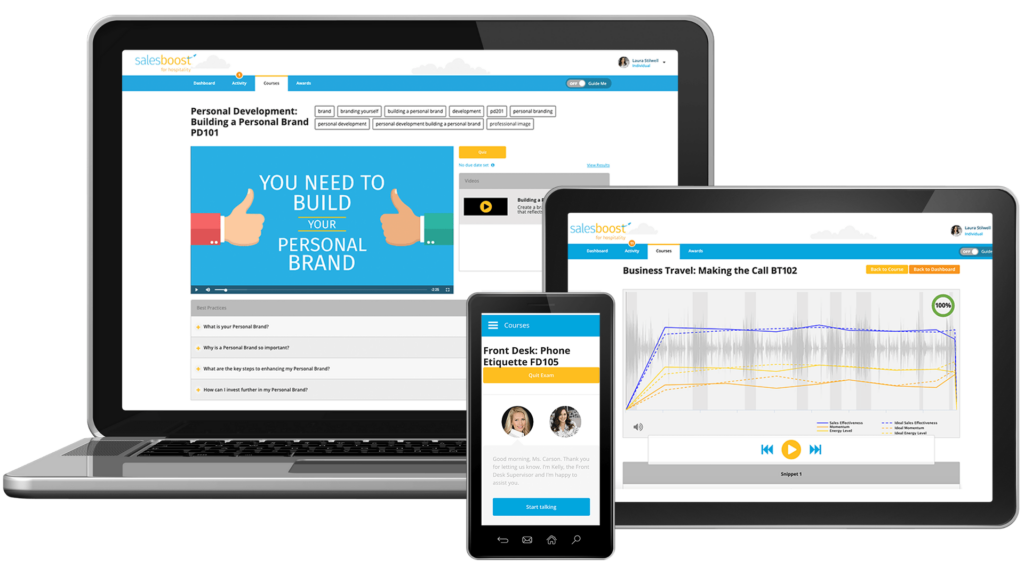
For front desk agents learning upsell techniques, restaurant staff practicing menu recommendations, or event coordinators running through a client pitch, this level of realistic practice is hard to replicate in a module.
The curriculum runs from entry-level to leadership, and you can customize it to match your brand’s service language. The trade-off is that you need to invest time learning the platform and ensure staff have a decent internet connection and microphone setup.
Pros:
- Voice technology lets staff practice real guest interactions and get instant coaching feedback
- Scenario-based courses mirror the pressure of actual hospitality environments
- Covers everything from entry-level service skills to C-suite leadership
- Data-driven progress tracking shows exactly where each team member needs work
Cons:
- Voice features require a solid internet connection and compatible setup, which can be an issue for older devices
- No live session or peer-to-peer interaction within the platform
User Rating: 5.0/5 (3 reviews) (Capterra)
Pricing: Paid plans start at $48/License/Month
3. Cornerstone on Demand: Best for Virtual and Instructor-Led Training
When I ran training for a distributed hotel portfolio where some properties had no on-site trainer, Cornerstone on Demand solved the virtual delivery problem better than anything else I tried. The integration with Zoom, Microsoft Teams, and Webex meant that ILT sessions could happen across locations without everyone traveling.
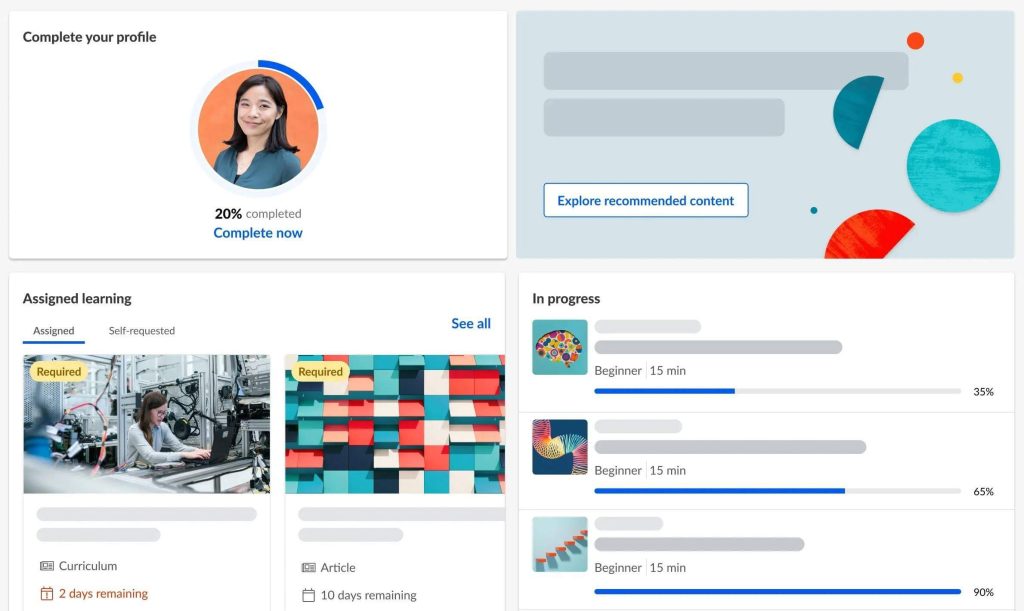
I could build personalized learning paths for each role, track progress with real data, and pull in a content library that covered everything from customer service to leadership development.
The platform earns the trust of major hospitality operators for good reason. The compliance module is robust enough for regulatory training, and the reporting does not require an IT degree to interpret. The main friction is cost. It is a premium platform priced for mid-to-large organizations, and the reporting configuration can get complex at scale.
Pros:
- Seamlessly integrates with Zoom, Teams, and Webex for hybrid and virtual ILT delivery
- Personalized learning paths with data-driven insights into individual and team progress
- Strong compliance module with large out-of-the-box course library
- Track record with major hospitality and services organizations
Cons:
- Pricing is on the higher end and can strain tighter training budgets
- Reporting and analytics have known limitations that can make impact measurement difficult
User Rating: 4.3/5 (Capterra)
Pricing: Paid plans start at $6/user/month
4. Docebo: Best for AI-Powered Personalized Training at Scale
I have used Docebo with a hospitality group that was trying to do something most platforms cannot: personalize training at scale. The AI layer is genuinely useful here. It does not just recommend courses.
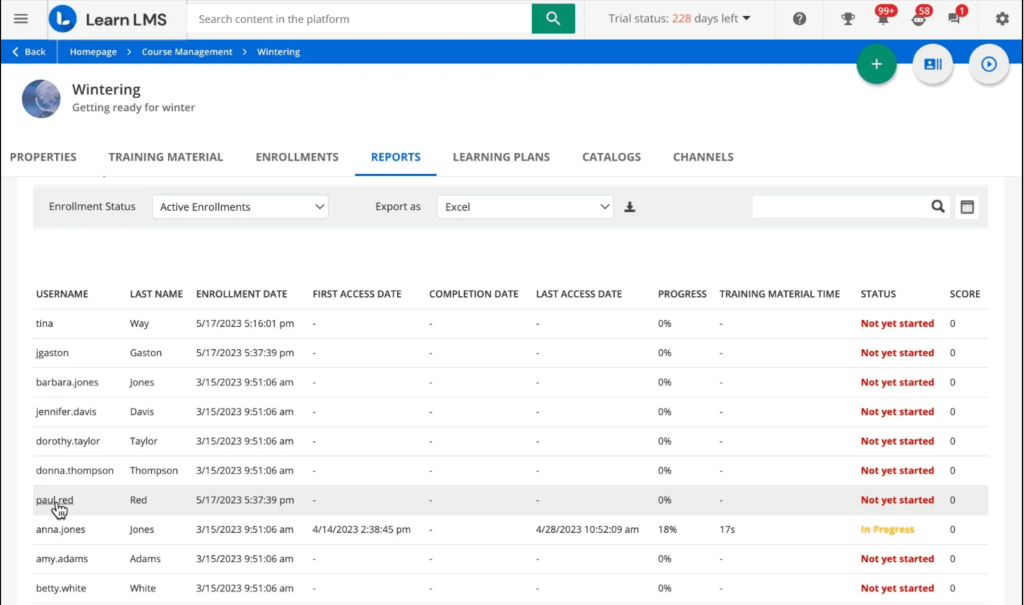
It analyzes how each learner is progressing, adapts content difficulty, and flags what someone is likely to need before they hit a performance gap. For a hotel with 200-plus staff across departments, that kind of intelligence reduces the admin burden considerably.
The gamification and social learning features help with the engagement problem that hospitality training always runs into. Staff actually wanted to complete modules because the platform felt more like an app than a compliance task. The mobile experience is strong enough for frontline workers.
Pros:
- AI personalizes learning paths and content recommendations for each individual learner
- Gamification and user-generated content keep staff genuinely engaged beyond mandatory modules
- Scales well across multi-property and multi-brand hospitality groups
- Strong ILT management features for blended programs
Cons:
- Entry-level pricing is $25,000/year, which puts it out of reach for most independent properties
- The mobile app has occasionally inconsistent performance on lower-end devices
User Rating: 4.4/5 (Capterra)
Pricing: Custom Quote
5. AbsorbLMS: Best for Learner Engagement
AbsorbLMS caught my attention when a resort GM told me it was the only LMS her seasonal staff actually finished. The platform is designed around engagement from the ground up: gamification, social learning, quizzes, video, and a clean mobile experience that does not feel like a compliance form.
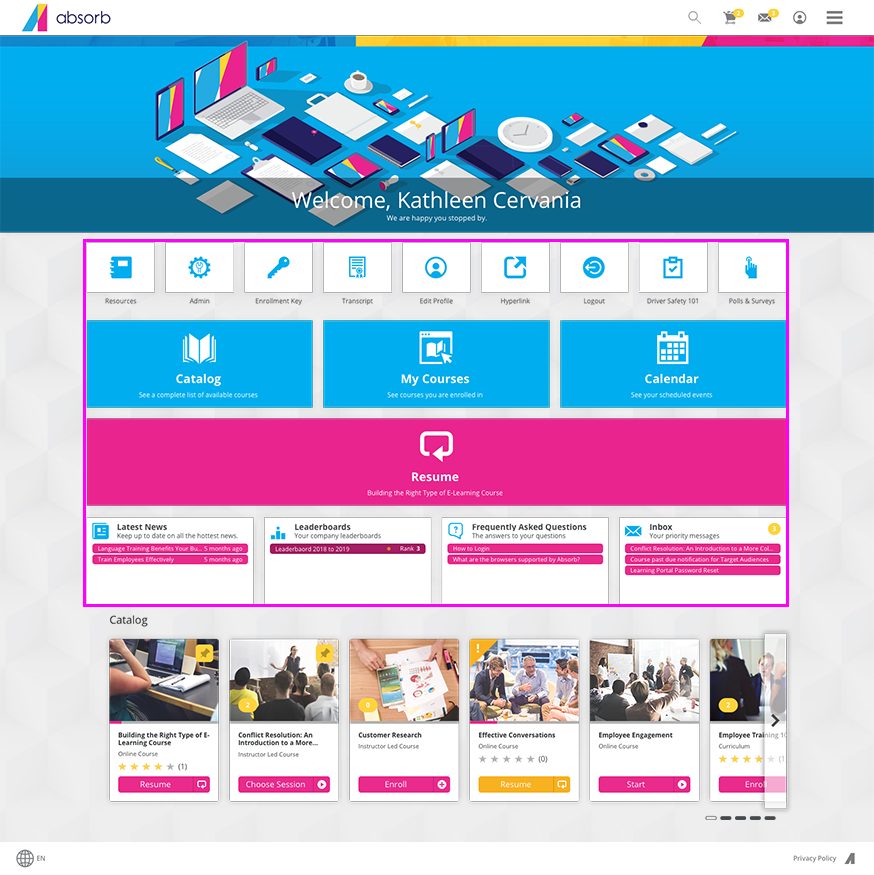
For hospitality, where your average learner is a 22-year-old who has grown up on short-form video, that matters more than you might expect. The AI-powered features accelerate onboarding, and the electronic signature tool is practical for compliance acknowledgments. The content creation tools are strong enough that you can build courses without external authoring software.
The downside is pricing transparency. The starting rate of $800 per month can be a hard sell for smaller operations, and the blended learning management has some gaps that admins notice at scale.
Pros:
- Gamification, social learning, and multimedia content formats drive higher completion rates
- Electronic signature feature creates audit-ready compliance documentation
- User-friendly interface that works without heavy IT support
- Strong content creation tools for building custom hospitality modules
Cons:
- Blended learning coordination has friction, especially for complex ILT schedules
- Pricing is opaque and the $800/month floor is steep for small or independent operators
User Rating: 4.5/5 (Capterra)
Pricing: Custom Quote
6. Green LMS: Best for Social and Peer Learning
Green LMS filled a gap I had been struggling with for years: how do you capture the institutional knowledge that lives in your veteran staff and make it accessible to new hires? The platform lets employees record and share their own how-to videos directly inside the LMS.
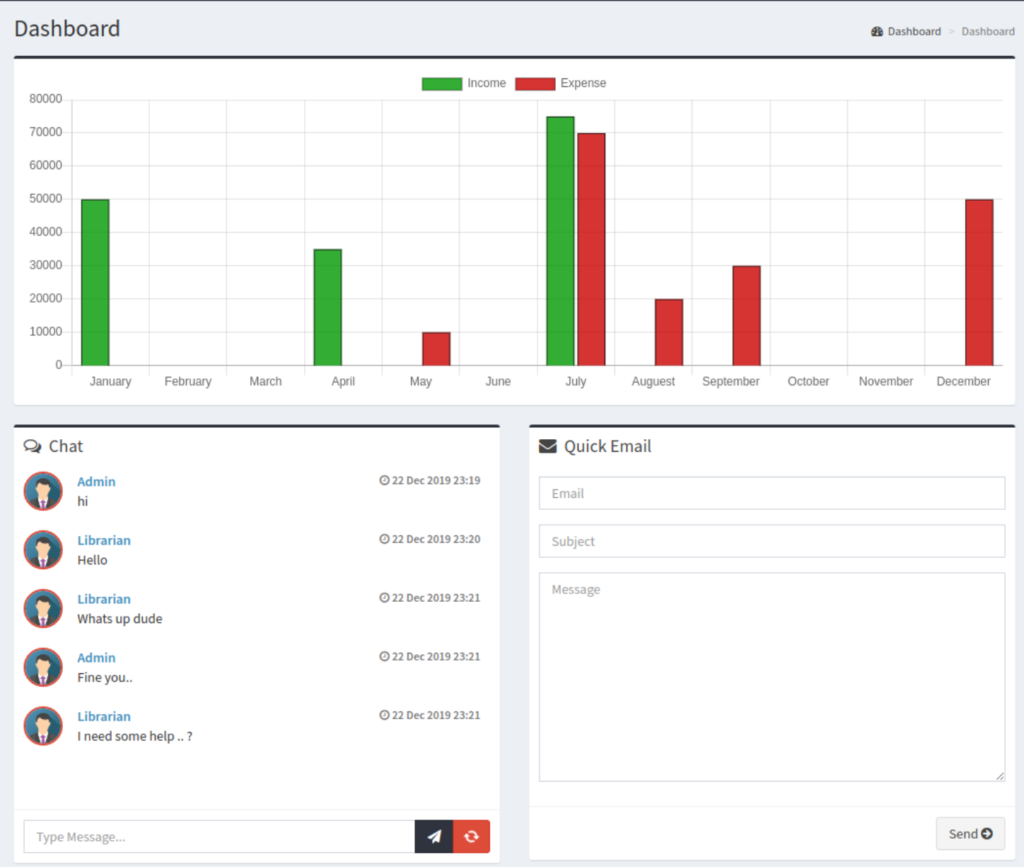
A senior housekeeper can record their linen-folding technique. An experienced bartender can walk through the cocktail menu. That content stays in the system for every new hire who follows.
The social learning model works well for hospitality because so much of great service is learned by watching someone who is excellent at it. The analytics and gamification add structure, and the multilingual support handles diverse teams. The limitations are around integration and in-person learning gaps. If your team is used to hands-on training, this supplements but does not fully replace it.
Pros:
- Peer learning model lets experienced staff create and share knowledge within the platform
- Multilingual support and accessibility standards for diverse hospitality workforces
- Gamification and adaptive learning features keep training dynamic
- Green credentials that align with sustainability-focused hospitality brands
Cons:
- Integration with some existing HR and scheduling systems is limited
- Not ideal for teams that need significant face-to-face or hands-on learning components
Pricing: Custom Quote
7. Seek LMS: Best for Course Management and Content Organization
SeekLMS gave me the flexibility I needed when training a hospitality team that covered genuinely different knowledge areas: culture and brand standards, PMS software, housekeeping procedures, food handling, and guest complaint resolution. Most LMS platforms force everything into the same format. SeekLMS let me build purpose-specific modules with 3D models, graphics, and animations for each topic.
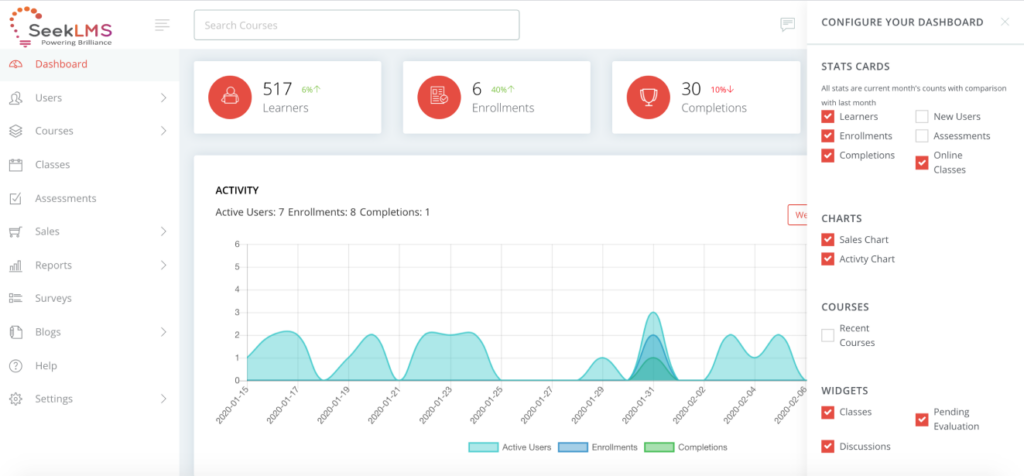
The single sign-on and centralized storage solved the access control problem we had with contractors and seasonal staff. I could give someone access to exactly what they needed without opening up the full library. The main limitation is the IT knowledge required for customization. If you do not have someone technical on the team, some of the more advanced features take time to configure properly.
Pros:
- Handles complex multi-topic course libraries without the content becoming unmanageable
- Interactive 3D and animated modules for procedural and equipment training
- Centralized storage with SSO for secure, role-based access across departments
- Anytime, anywhere access for staff who are not desk-based
Cons:
- Customization and troubleshooting require IT or programming knowledge
- Compatibility with some devices and browsers has been inconsistent
Pricing: Custom pricing.
8. TalentLMS: Best for Scalable Training Across Multiple Locations
TalentLMS is the platform I recommend most often to hotel groups and restaurant chains that are growing. The branch and multi-portal structure means you can run a centralized training library at the corporate level while still letting each property customize the experience for their team.
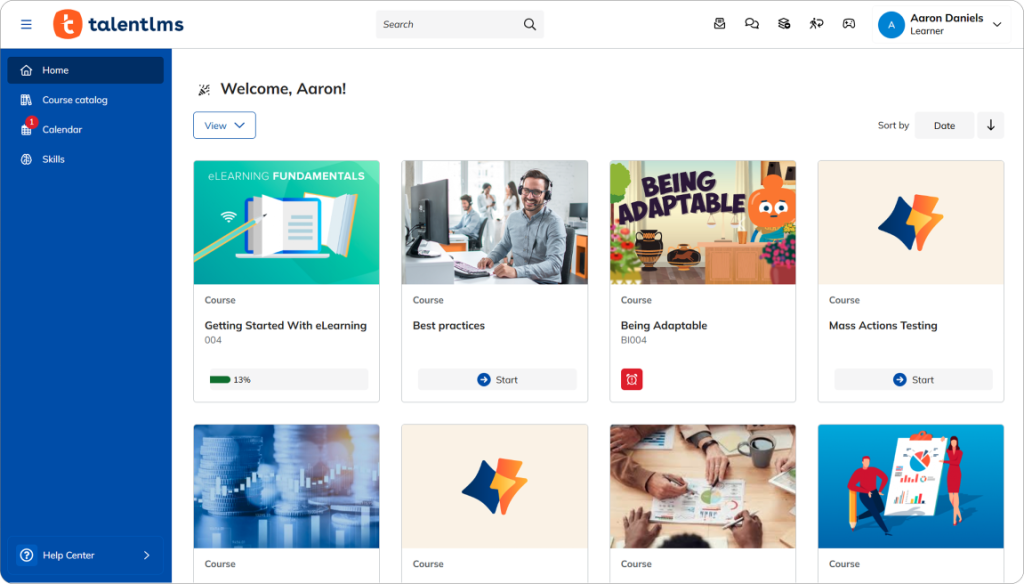
I set up a group with 12 locations on it, and the ability to maintain brand-wide standards while giving GMs some control over local content made the whole rollout significantly smoother.
SCORM compatibility means existing content, whether that is safety videos, brand standards modules, or PMS simulations, uploads without rebuilding anything. The gamification works well with hospitality’s competitive culture, and the reporting gives both property-level and portfolio-level visibility. It is not as feature-rich as Docebo or Cornerstone, but for the price and the flexibility, it is hard to beat for multi-property operators.
Pros:
- Easy to set up role-based learning paths for different hospitality departments
- SCORM support for importing existing training content
- Solid reporting and completion tracking for compliance purposes
- Scales cleanly from small teams to multi-property groups
Cons:
- The interface feels dated compared to newer platforms
- Advanced customization options are limited on lower-tier plans
User Rating: 4.7/5 (Capterra)
Pricing: Paid plans start at $119/month
9. iSpring Learn: Best for Fast Course Creation From Existing Materials
iSpring Learn is built around one core premise: get people trained and operational as fast as possible. For hospitality, where you might onboard 30 seasonal staff in a week, that premise is exactly right. The mobile app works offline, which means a room attendant can complete their onboarding modules during a break without needing the hotel Wi-Fi. The content creation tools are fast enough that a training manager can build a module from existing PowerPoint files in an afternoon.
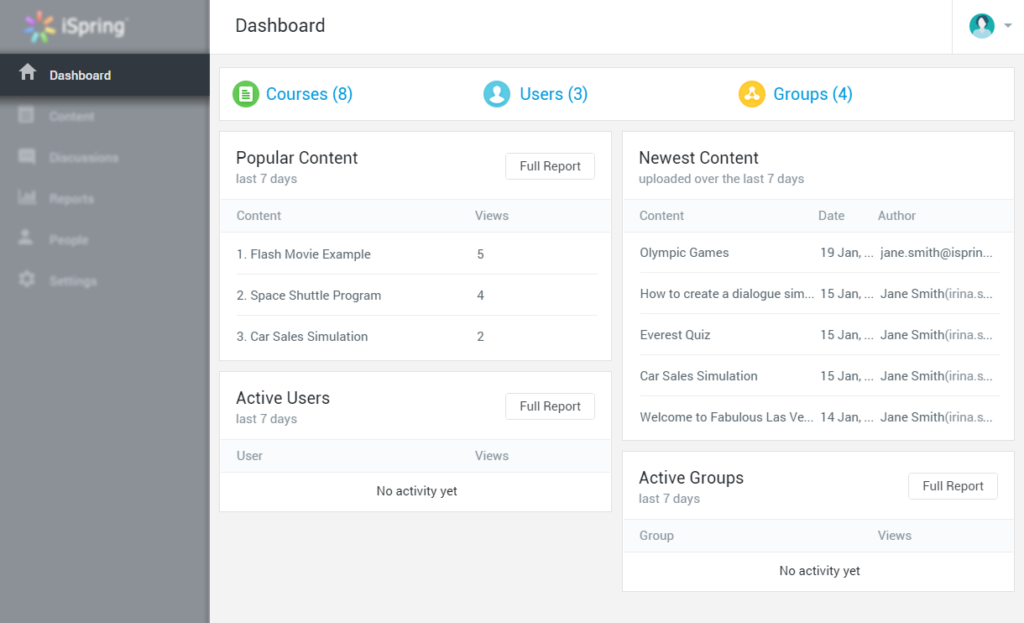
The learning paths function lets you sequence role-specific training so a new front desk agent gets exactly what they need in exactly the right order, without being overwhelmed by content that does not apply to them yet. The reporting is clean and actionable. The limitation is depth: iSpring is excellent for fast onboarding and compliance delivery but lighter on the advanced engagement and social features that platforms like Docebo or AbsorbLMS offer.
Pros:
- Converts existing PowerPoints, videos, and documents into proper courses without rebuilding
- Low technical barrier for managers who are not instructional designers
- Role-play and scenario modules for practicing guest service situations
- Mobile delivery that works for deskless hospitality workers
Cons:
- The authoring tool is best for straightforward formats, complex interactive content requires more effort
- Reporting depth is less advanced than some competitors on this list
User Rating: 4.7/5 (Capterra)
Pricing: Paid plans start at $720/author/year
10. 360Learning: Best for Peer-Led Training in Service Teams
360Learning flipped my assumption about who should be creating training content. On most platforms, the training manager builds everything. On 360Learning, subject matter experts on your own team, your best bartender, your most experienced concierge, your top-performing front desk agent, create the content.
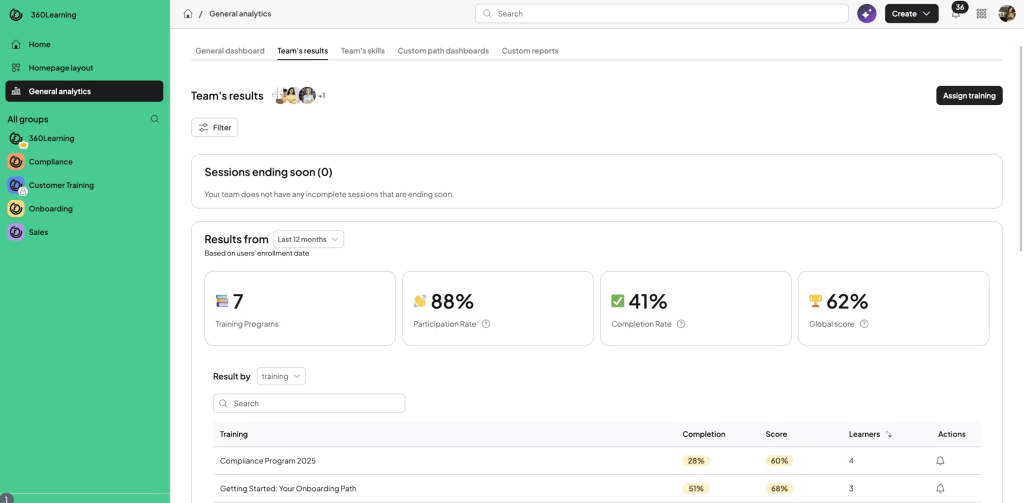
The collaborative authoring tools are fast enough that a department head can build a module in a day, and the social feedback loop means content improves over time as learners react and comment.
For hospitality, where tacit knowledge (how to de-escalate a complaint, how to read a guest’s mood, how to upsell naturally) is notoriously hard to teach through slides, having great performers document their own approaches is genuinely more effective than anything a corporate training team could write. The platform requires a cultural shift, though. If your managers are not bought into contributing, the model does not work.
Pros:
- Collaborative authoring lets high-performing staff create training from their own experience
- Social feedback loop improves content quality over time without admin intervention
- Strong for capturing tacit service knowledge that is hard to teach through traditional modules
- Engagement features built around team discussion, not individual consumption
Cons:
- Requires management buy-in and active participation to work; passive adoption fails
- Less suitable for compliance-heavy training where content needs to be centrally controlled
User Rating: 4.7/5 (Capterra)
Pricing: Starts at $8/user/month
My Top 3 Picks for Hospitality Training
After evaluating the platforms in this guide, a few stood out for their ability to solve the day-to-day training challenges hospitality businesses face. These are the three solutions I would prioritize based on ease of deployment, mobile accessibility, onboarding efficiency, and support for distributed hospitality teams.
1. ProProfs Training Maker
ProProfs is my top recommendation for the majority of hospitality operators because it solves the most common real-world problems: you need training fast, you need compliance proof, you need it to work on a phone, and you need it to reach a team that speaks three languages. The AI course builder removes the content creation bottleneck immediately. The compliance library gives you a foundation without starting from zero. The mobile experience works for every role.
2. TalentLMS
TalentLMS earns the second spot for multi-property operators specifically. The branch structure is genuinely well-designed for a scenario where corporate needs visibility and control while individual properties need flexibility. The SCORM compatibility makes migration from an existing content library straightforward.
3. iSpring Learn
iSpring gets the third spot because it solves the onboarding speed problem better than almost anything else on the list. Offline mobile access, fast PowerPoint conversion, and clean role-based learning paths mean a new hire can be completing real training before their first shift without any technical barriers. For properties that hire seasonally or have high turnover, fast onboarding is the single highest-ROI capability a training platform can have.
How I Chose These Platforms
Picking an LMS for hospitality is different from picking one for a software company. I evaluated every platform on this list against criteria that actually matter in hotel, restaurant, and resort environments.
- User Reviews and Ratings: I started with G2 and Capterra ratings from verified users in hospitality roles. Ratings from HR managers and L&D professionals in similar environments carry more weight than aggregate scores that include unrelated industries.
- Core Features for Hospitality: The non-negotiables were: mobile-first access for deskless workers, multilingual support, role-based learning paths, compliance tracking with audit trails, automated reminders, and reporting that is actually readable by non-data people.
- Ease of Use: A platform that requires an IT team to manage is a liability in hospitality. I looked for systems where training managers and HR leads can create, update, and assign content without technical support.
- Onboarding Speed: Given the turnover reality in hospitality, the ability to get someone from new hire to floor-ready fast is one of the highest-value features an LMS hospitality can have. Platforms with pre-built hospitality content and AI-assisted course creation scored significantly higher here.
- Customer Support: Implementation is where most LMS rollouts fail. I factored in responsiveness, onboarding help, and whether the support team understands hospitality-specific use cases, not just software.
- Value for Money: This is not about choosing the cheapest option. It is about whether the platform’s features and ROI justify its cost for your operation size and training complexity.
Hospitality Training Courses: What Your Staff Actually Needs to Complete
One of the most practical questions training managers ask me is: what training is mandatory, and what training helps improve guest experience and operational performance? Here’s a simple breakdown.
Mandatory Courses
Food Safety and Handling: Food safety training is essential for restaurants, hotels, resorts, and catering operations. Programs such as ServSafe, HACCP, and state-approved food handler certifications help employees understand food hygiene, contamination prevention, and safe food preparation practices.
Alcohol Service (RBS/TIPS/TABC): Employees who serve alcohol often need Responsible Beverage Service (RBS), TIPS, or TABC certification, depending on state requirements. These courses cover responsible alcohol service, age verification, and liability prevention.
Hospitality and Service Training Courses Available in ProProfs Training Maker
Beyond compliance, hospitality businesses need training that improves service quality, employee performance, workplace safety, and guest satisfaction.
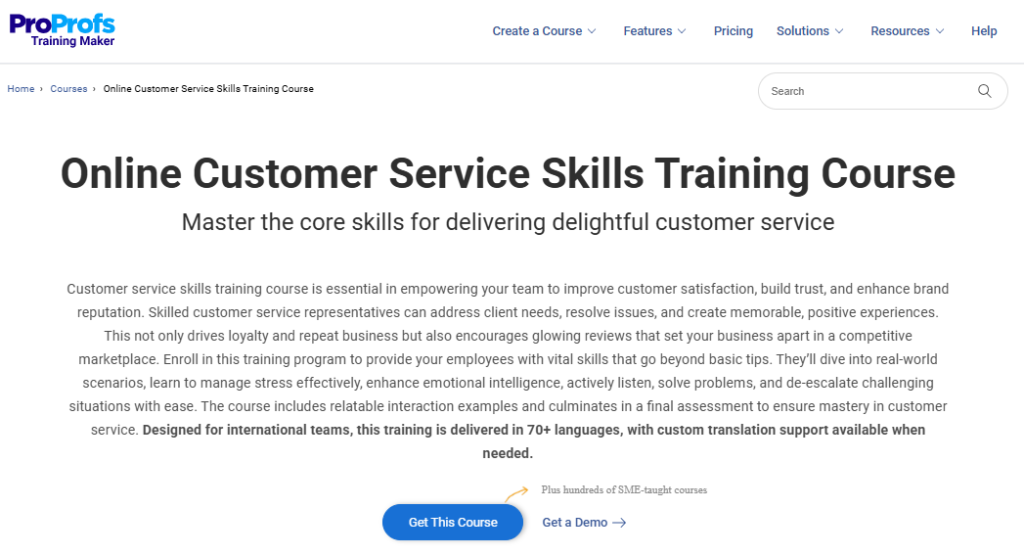
Customer Service Training: Guest experience is at the heart of hospitality. Customer service courses help employees improve communication, handle complaints effectively, and deliver consistent guest experiences.
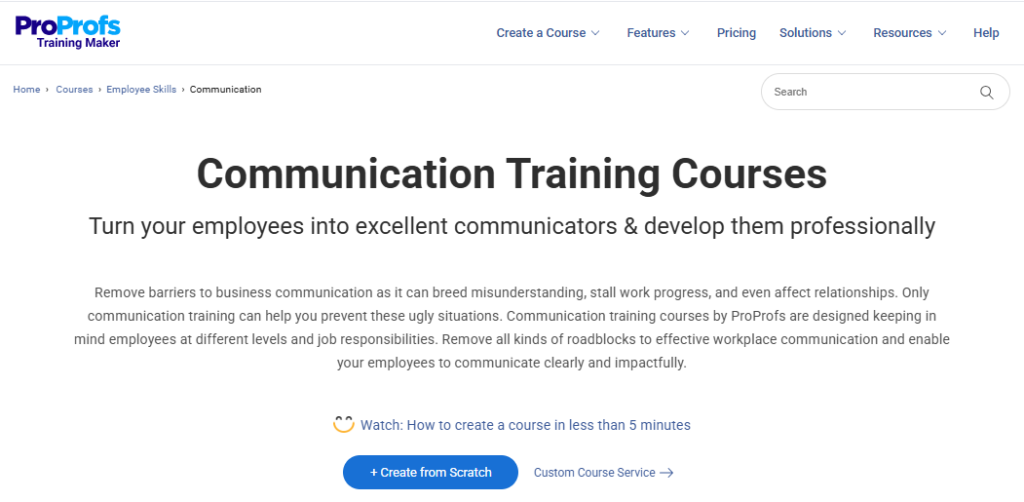
Communication Skills Training: Front desk staff, supervisors, and guest-facing employees can strengthen active listening, interpersonal communication, and conflict-resolution skills.
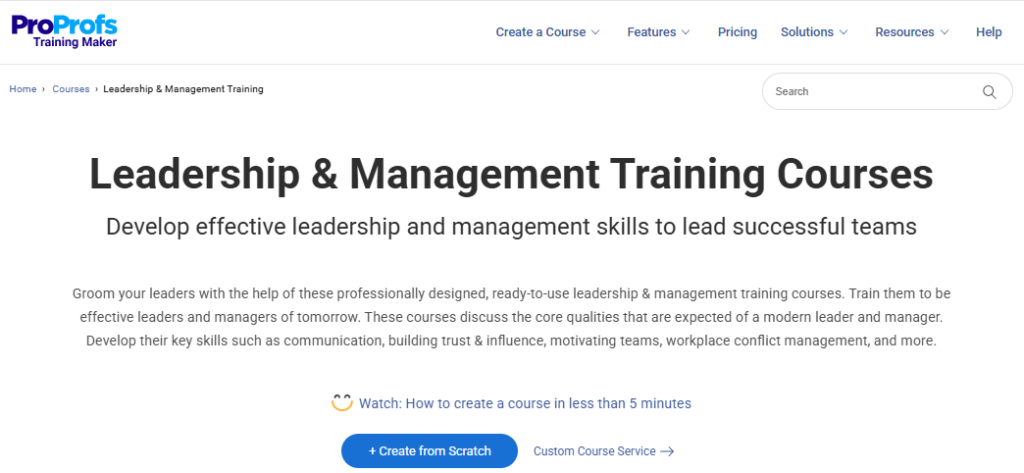
Leadership and Management Training: Supervisors and department heads can develop skills in coaching, delegation, performance management, team leadership, and employee development.
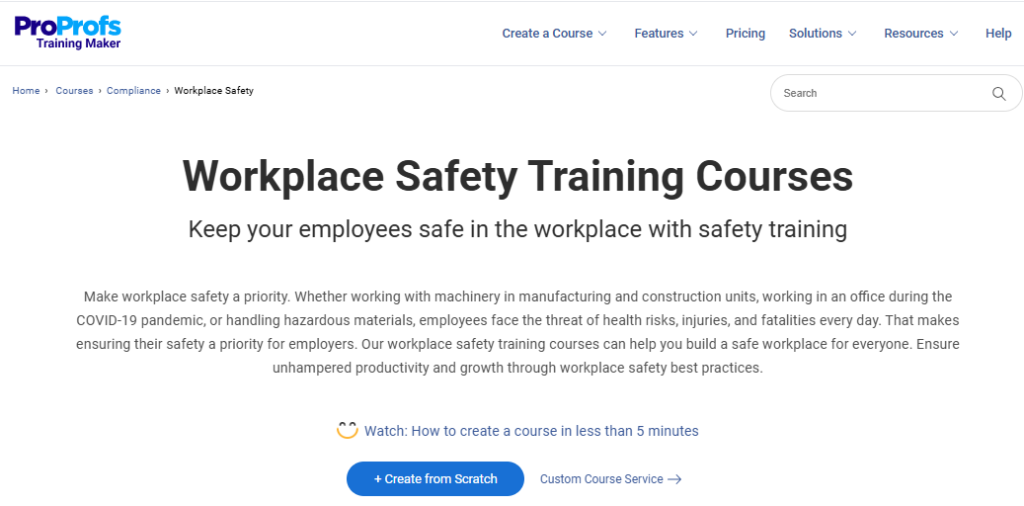
Workplace Safety Training: Safety courses help employees identify hazards, prevent injuries, and follow safe work practices. Topics such as fire safety, emergency response, slips and falls prevention, workplace violence prevention, and PPE usage are especially relevant for hospitality teams.
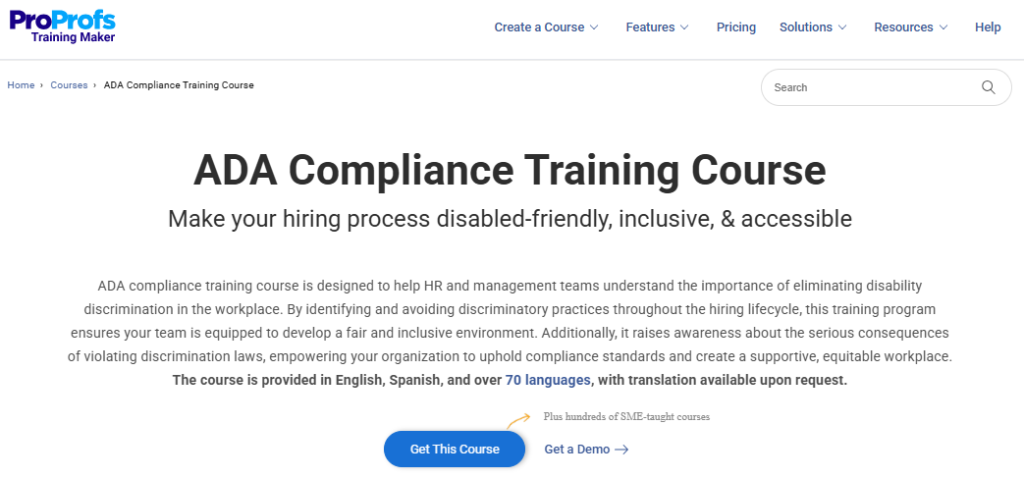
ADA Awareness and Accessibility Training: Accessibility training helps staff understand how to accommodate guests with disabilities, provide inclusive service, and comply with accessibility standards while creating a better guest experience.
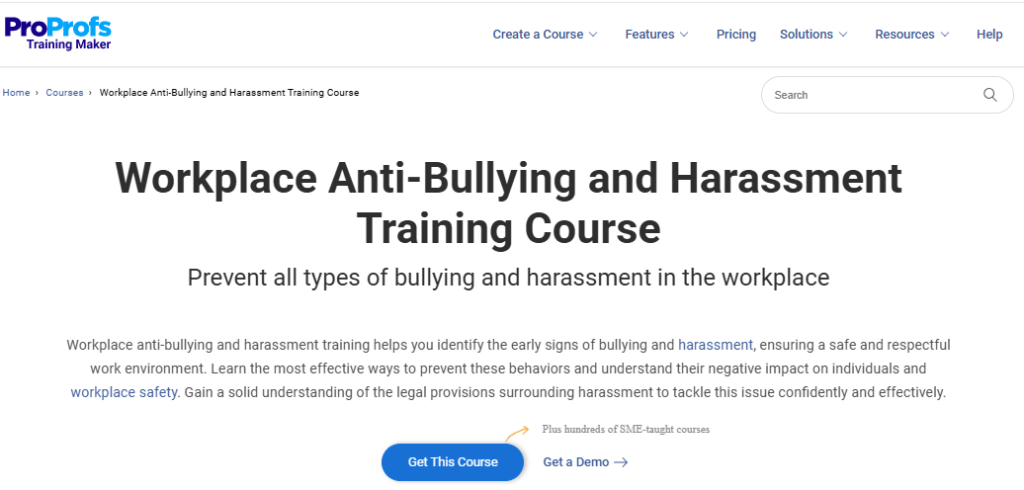
Anti-Harassment and Workplace Discrimination Training: These courses educate employees on workplace conduct, harassment prevention, discrimination laws, reporting procedures, and fostering a respectful workplace culture.
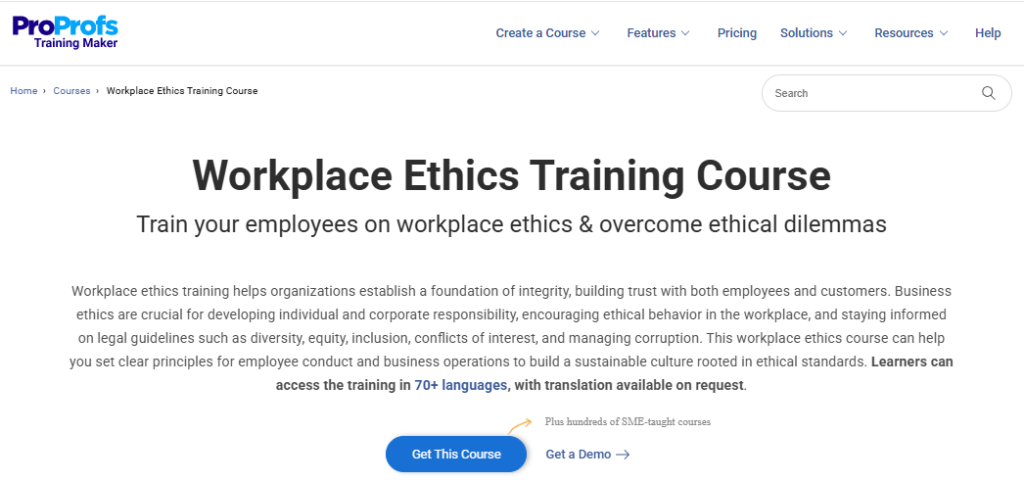
Workplace Ethics and Compliance Training: Ethics and compliance training reinforces professional conduct, organizational policies, ethical decision-making, and accountability across teams.
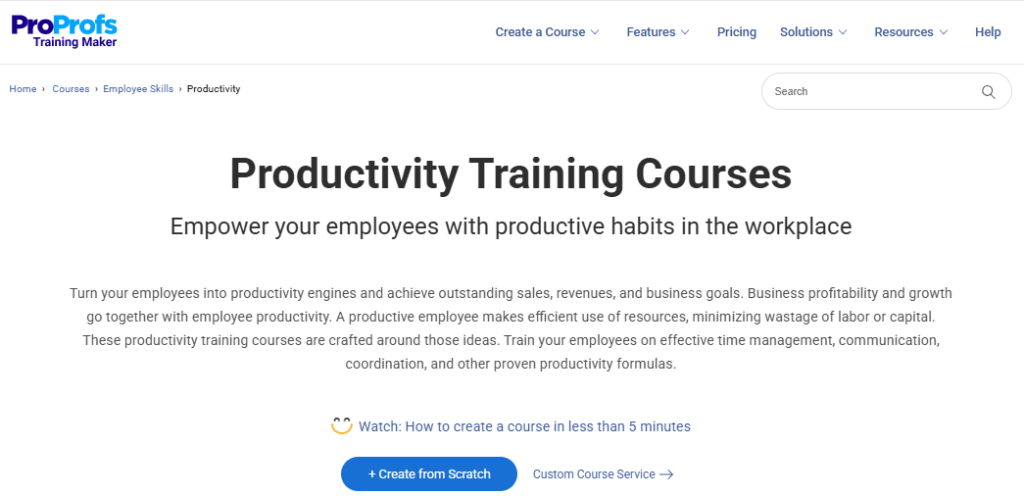
Productivity and Time Management Training: These courses help employees prioritize tasks, manage busy shifts, reduce stress, and improve workplace efficiency.
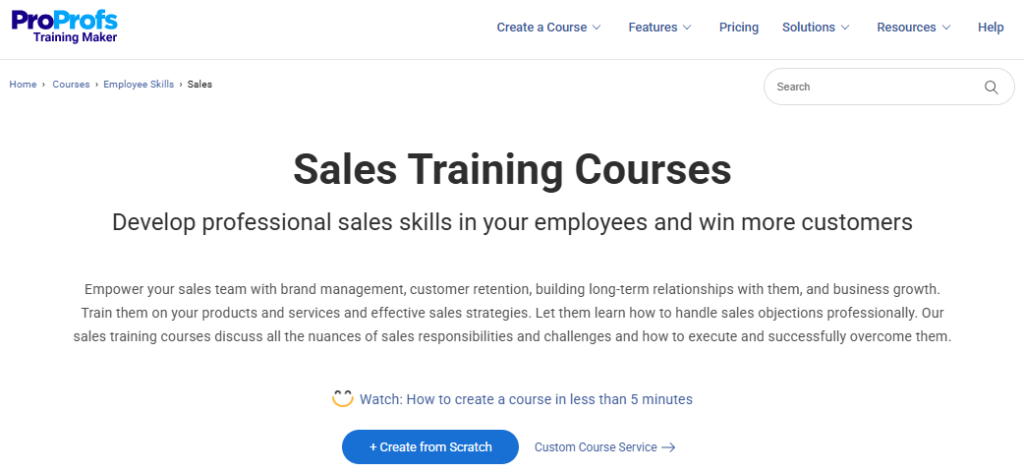
Sales and Customer Relationship Skills: Front-of-house employees can build skills in upselling, customer engagement, relationship building, and creating additional revenue opportunities through better guest interactions.
How to Train Multilingual and Deskless Hospitality Teams
Two things make hospitality workforces uniquely difficult to train: many staff do not have a dedicated computer, and a significant portion speak English as a second language or not at all. Here is how to close those gaps.
- Choose a Platform With Real Language Support: Not all multilingual LMS features are equal. Some platforms offer interface translation only. Others offer full course content translation and localization. For hospitality operations with diverse staff, you need the latter. ProProfs Training Maker, for example, supports 70+ languages across full course delivery.
- Design for the Phone, Not the Desktop: Your housekeeping team is not sitting at a desktop. That’s why a Mobile LMS should be a priority, not an afterthought. Every course should be tested on a mobile screen first. Use short modules, large tap targets, and minimal text-heavy slides that employees can complete on the go.
- Use Video Over Text: A short video demonstrating proper bed-making technique communicates faster and more clearly to a non-native English speaker than three paragraphs of instructions. Visual-first content also works better for learners with lower digital literacy.
- Build in Short, Spaced Sessions: Hospitality employees often work unpredictable shifts, making long training sessions impractical. A microlearning tool helps by breaking training into focused modules that take just five to ten minutes to complete. Delivering content in short, spaced sessions makes learning easier to fit into busy schedules while improving knowledge retention and recall.
The Right Hospitality LMS Gives You Control You Did Not Know You Were Missing
Choosing the right hospitality LMS starts with a few essentials: mobile access, multilingual support, compliance tracking, fast onboarding, and an intuitive user experience. The ideal platform should help train deskless employees efficiently, maintain consistent service standards across multiple locations, and simplify compliance management without increasing administrative workload.
For hospitality businesses facing high employee turnover, distributed teams, and ongoing regulatory requirements, finding a solution that combines training, automation, and scalability is critical.
ProProfs Training Maker stands out by offering AI-powered course creation, ready-made training content, automated compliance tracking, mobile learning, and support for 70+ languages, making workforce training easier to manage and scale.
Frequently Asked Questions
What is the difference between a hospitality LMS and a generic LMS?
A hospitality LMS is designed for deskless, high-turnover workforces that rely heavily on mobile access, multilingual training, and compliance tracking. Generic LMS platforms often target office-based employees and may lack hospitality-specific onboarding workflows, reporting, and training content needed for daily operations.
How do I choose the right hospitality LMS for my property size?
Start by evaluating workforce size, training volume, and compliance requirements. Smaller properties often benefit from affordable platforms with ready-made content, while larger hotel groups typically need multi-location reporting, automation, integrations, and centralized administration to manage training at scale.
How does a hospitality LMS support compliance training?
A hospitality LMS automates compliance management by tracking training completions, storing certification records, sending renewal reminders, and generating audit-ready reports. This reduces manual recordkeeping and makes it easier to demonstrate compliance with health, safety, and workplace regulations when required.
Can hospitality employees complete training on their phones?
Yes. Most modern hospitality LMS platforms offer mobile access, allowing employees to complete onboarding, compliance training, and skill development courses from smartphones or tablets. Mobile-first learning is especially valuable for deskless staff who may not have regular access to computers.
How long does it take to implement a hospitality LMS?
Implementation timelines depend on complexity. A basic rollout using existing courses can often be completed within one or two weeks. Multi-property deployments with custom content, integrations, and user setup typically take several weeks to fully implement and optimize.
What is the ROI of a hospitality LMS?
The biggest returns typically come from faster onboarding, reduced training administration, lower compliance risks, and improved employee performance. Organizations can also reduce manager-led training hours and create more consistent learning experiences, helping employees become productive sooner.
What features should every hospitality LMS include?
Look for mobile learning, multilingual support, compliance tracking, automated reminders, reporting dashboards, role-based assignments, and easy content management. These features help hospitality businesses deliver consistent training, maintain service standards, and efficiently manage learning across multiple teams and locations.
Let ProProfs AI create your training course

 We'd love your feedback!
What did you like & how can we make it even better?
 Thanks for your feedback!
 Ask Your Question
Have a question? Get expert help to make your decision easier.