

I’ve evaluated a lot of leadership training software, and the pattern repeats itself on a reliable schedule. Pretty dashboard. Impressive demo. Library of courses with titles like “Strategic Communication for Modern Leaders..”
And then, three months later, your managers are doing exactly what they were doing before, except now they have a PDF certificate in their Downloads folder.
This list is built for people who’ve already been through that cycle once.
Below you’ll find 10 leadership training software platforms I’ve evaluated across real use cases, what each one is genuinely good at, where it falls short, and how to figure out which one fits your situation before you waste six months on the wrong tool.
What Is Leadership Training Software?
The distinction that matters upfront: a good platform doesn’t just deliver content. It closes the loop between learning and behavior, through practice scenarios, feedback mechanisms, and real data on whether any of it is sticking. If a platform can’t show you whether skill levels actually changed, it’s measuring effort, not outcomes.
The 10 Best Leadership Training Software Platforms
These platforms are evaluated on five things that actually predict whether leadership training works in practice: applied practice features, accountability mechanisms, role-level customization, workflow integrations, and reporting depth. Completion rates tell you who clicked through. These criteria tell you whether anything changed.
Here’s a table for your quick glance:
| Platform | Best For | Pre-Built Leadership Courses | Capterra Rating |
| ProProfs Training Maker | AI-powered course creation and scalable corporate training | Yes, 500+ courses, including leadership, communication, conflict resolution, compliance | 4.8/5 |
| SC Training | Mobile-first microlearning for frontline managers | Yes, bite-sized modules including “Leading Under Pressure” | 4.7/5 |
| MentorcliQ | Enterprise mentorship program management | No, relationship management only | 4.8/5 |
| iSpring LMS | 360-degree feedback and competency assessment | Yes, via iSpring Content Library | 4.6/5 |
| 360Learning | Collaborative, peer-driven learning | Partial, user-generated, and AI-assisted | 4.6/5 |
| Together Software | Mentoring relationship health monitoring | No, program management only | 4.5/5 |
| Absorb LMS | AI-powered learning paths for large organizations | Yes, via Absorb Amplify content library | 4.5/5 |
| Chronus | DEI-focused leadership pipeline development | No, mentoring infrastructure only | 4.6/5 |
| TalentLMS | Fast deployment for SMB teams | Yes, via TalentLibrary | 4.7/5 |
| Qooper | Structured mentoring with minimal admin overhead | No, mentoring program management only | 4.7/5 |
1. ProProfs Training Maker – Best for AI-Powered Training Development and Scalable Corporate Leadership
ProProfs Training Maker is a cloud-based LMS built for organizations that need to create, scale, and measure leadership training without a dedicated instructional design team or a six-month implementation cycle.
The AI course builder is the fastest I’ve used for this category. You describe the training goal in plain language, and it generates a structured program in minutes. Give it a spin:

Let ProProfs AI create your training course
For teams that don’t want to build from scratch, there’s a library of 500+ expert-built, editable with AI-assisted rewrites, covering leadership, communication, conflict resolution, workplace safety, and compliance training.
Branching scenarios let leaders practice difficult conversations before those conversations happen with real people. Gamification features, badges, leaderboards, and points keep the experience from feeling like mandatory homework. And the analytics dashboards actually show you where learners are dropping off and what skill gaps look like in aggregate, not just who ticked the “complete” box.
The 70+ language support makes this practical for global or multilingual teams. SCORM/xAPI compatibility, Salesforce and Justworks integrations, and SSO support mean it fits into existing workflows rather than demanding a separate login ecosystem.
For organizations evaluating the best leadership training software for corporate mentorship programs that also support scalable course delivery, this is where I’d start.
Pros:
- AI builds complete, structured training programs from a short prompt
- 500+ pre-built, editable leadership and compliance courses ready to deploy
- Branching scenarios create practice environments for real leadership situations
- Gamification features drive engagement beyond passive content consumption
- Analytics dashboards surface skill gaps and completion data in real time
- Supports 70+ languages for global and multilingual teams
- Integrates with Salesforce, Justworks, SCORM/xAPI, and SSO tools
Cons:
- No on-premise or downloadable setup; fully cloud-based
- No dark mode for low-light environments
Pricing: Free plan available for growing teams. Paid plans start at $1.99 per active learner/month; the Business tier is at $3.99/active learner/month.
2. SC Training – Best for Mobile-First Microlearning
SC Training, formerly EdApp, is built around a single constraint: your managers are rarely sitting at a desk when they most need to develop a skill.
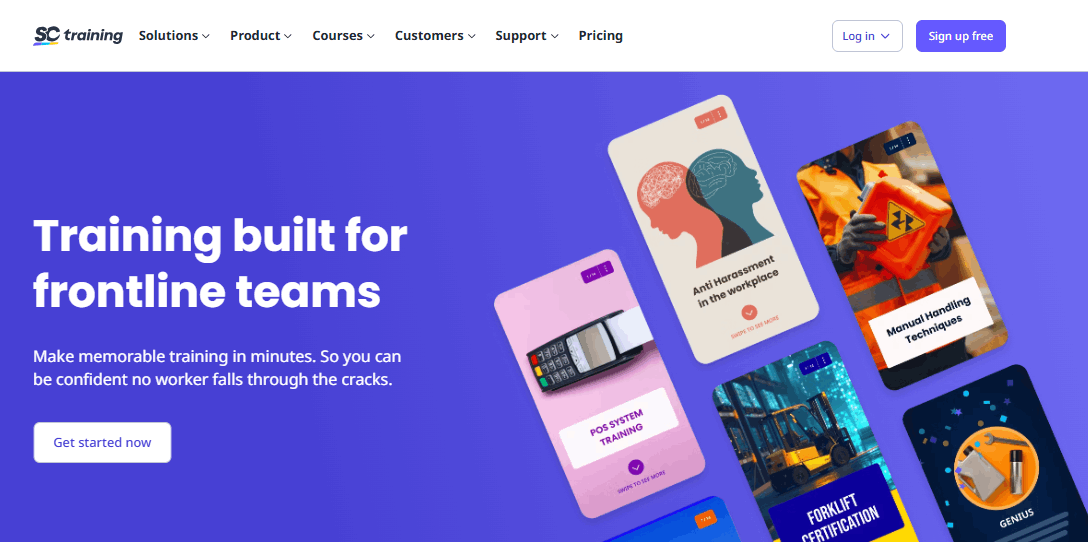
The format is microlearning, focused lessons that run under 10 minutes, designed to be completed between meetings or on a mobile device in a field environment. Pre-built modules include topics like “Leading Under Pressure” and conflict de-escalation, and the AI creator tool lets you build and edit courses without an instructional design background.
The mobile UX is genuinely phone-first, not a desktop interface awkwardly scaled down. Where SC Training runs thin is depth: for organizations that need robust analytics dashboards, multi-portal LMS configurations, or complex branching scenarios, the feature set can feel limited.
But as one of the best digital workplace training platforms for senior executives managing distributed or frontline teams, it’s hard to beat for accessibility and adoption.
Pros:
- Microlearning format fits into real workflows without requiring blocked calendar time
- AI creator tool makes course building fast for non-designers
- Phone-first UX drives adoption in field-based or distributed teams
- Pre-built leadership modules available out of the box
Cons:
- Analytics and reporting are lighter than enterprise-grade alternatives
- Less suited for deep scenario-based leadership development at scale
Pricing: Free plan available. Paid tiers start at $5/user/month.
3. MentorcliQ – Best for Enterprise Mentorship Program Management
MentorcliQ is mentoring infrastructure, which is a functionally different category from course delivery, and it’s worth being precise about that before you evaluate it.
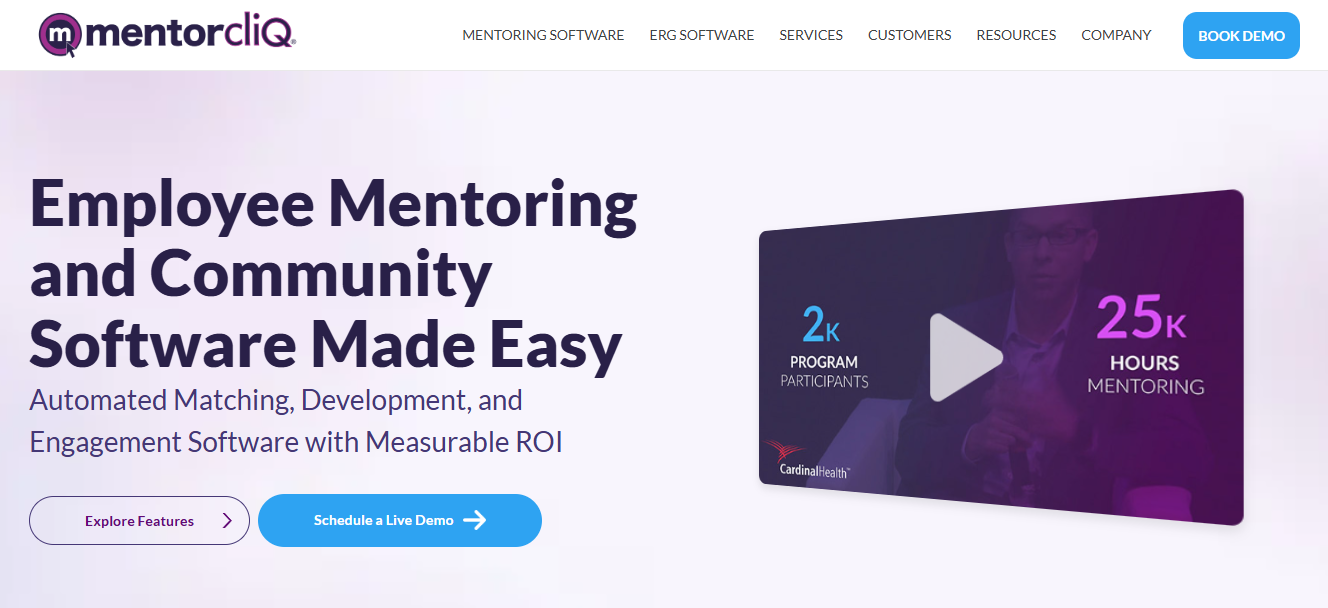
If your leadership development strategy centers on formal mentoring relationships between high-potential employees and experienced executives, MentorcliQ is purpose-built for that in a way that general LMS platforms aren’t.
The SMART Matching algorithm pairs mentees with mentors based on goals, personality, and development needs rather than just seniority and availability. Program tracking gives administrators visibility into engagement across every active relationship, not just the ones they manually check in on.
As enterprise-ready mentorship software for leadership training, the reporting surfaces patterns at scale, which is valuable when you’re running multiple mentoring tracks across a large organization simultaneously. The honest tradeoff: MentorcliQ doesn’t do course delivery. If you need both content and mentoring in one platform, you’ll need to combine tools.
Pros:
- SMART Matching algorithm produces better mentor-mentee pairings than manual assignment
- Scales across large organizations with multiple mentoring tracks running in parallel
- Strong engagement analytics for program administrators
- Built specifically for formal mentoring, not adapted from a general LMS
Cons:
- No native course authoring or pre-built content library
- Enterprise pricing; better suited for mid-to-large organizations
Pricing: Custom pricing based on organization size. Contact for a quote.
4. iSpring LMS – Best for 360-Degree Feedback and Skills Assessment
iSpring goes deeper on skills mapping and performance visibility than most platforms in this category.
If your priority is identifying where specific leaders have gaps before designing training around those gaps, rather than assigning a generic curriculum and hoping it lands, iSpring gives you the assessment infrastructure to do that properly.
The 360-degree feedback workflows collect input from peers, direct reports, and managers, then organize it into competency radar charts that visually map skill strengths and weaknesses. That data feeds into targeted adaptive learning paths rather than one-size-fits-all course assignments.
Course authoring via iSpring Suite integrates well for teams that build content in PowerPoint. The limitation: setup is more complex than simpler LMS alternatives, and the feedback features require genuine organizational participation to generate meaningful data.
Pros:
- 360-degree feedback infrastructure is among the most comprehensive in this category
- Competency radar charts make skills mapping visual and immediately actionable
- Adaptive learning paths can be driven by assessment data rather than role alone
- Strong course authoring via iSpring Suite for PowerPoint-based teams
Cons:
- Setup complexity is higher than simpler LMS platforms
- Full value requires organization-wide participation in feedback processes
Pricing: Plans start at $2.29/user/month for up to 100 users. Enterprise pricing available.
5. 360Learning – Best for Collaborative, Peer-Driven Leadership Development
360Learning starts from a different premise than most leadership training software: the people closest to the work often know things worth teaching, and a platform should make it easy to capture and share that knowledge laterally.
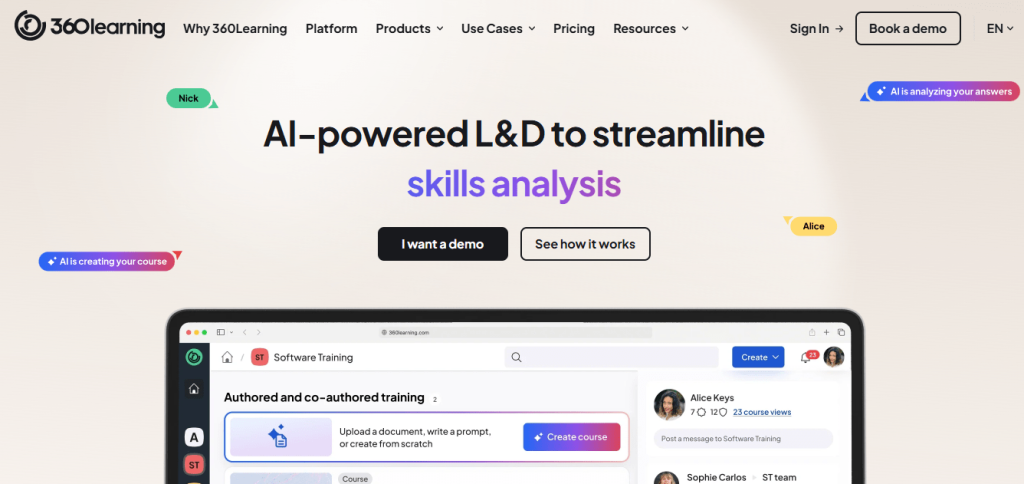
The collaborative course creation model lets subject matter experts inside your organization build and share training without needing a dedicated L&D team or instructional design background. AI-generated scenarios give leaders practice environments for difficult situations.
Social learning features, commenting, discussion threads, and direct responses to content add a layer of accountability that passive video courses can’t replicate. For organizations where institutional leadership knowledge exists but isn’t systematically accessible, 360Learning surfaces it.
The realistic limitation: if your team isn’t sufficiently engaged to participate in content creation, the differentiating features don’t activate. This platform rewards participation and punishes indifference.
Pros:
- Collaborative authoring captures institutional knowledge that traditional LMS platforms miss
- AI scenario generation creates applied practice environments for leadership situations
- Social features add peer accountability without requiring separate tools
- Strong for organizations with distributed expertise across departments
Cons:
- Value is heavily dependent on learner and expert participation
- Less structured than traditional LMS platforms for compliance training or certification needs
Pricing: Plans start at $8/registered user/month. Enterprise pricing available.
6. Together Software – Best for Mentoring Relationship Health Monitoring
Most mentoring programs fail quietly. Two enthusiastic meetings, then scheduling gets hard, then three months pass, and the program coordinator realizes an entire cohort quietly stopped showing up.
Together Software is built specifically to catch that before it becomes a dropout statistic. The Health Monitor feature flags struggling mentor-mentee relationships proactively, before disengagement becomes permanent.
Automated nudges and check-in prompts keep relationships active without requiring a program manager to manually track every pairing across the organization. The platform handles multiple mentoring formats, peer mentoring, reverse mentoring, and coaching within one system.
For L&D teams evaluating top leadership training software for onboarding and succession planning with limited administrative bandwidth, automated relationship monitoring is genuinely useful. The honest limitation: Together doesn’t do course delivery, so it works best alongside a content platform rather than as a standalone solution.
Pros:
- Health Monitor proactively flags at-risk mentoring relationships before they collapse
- Handles peer, reverse, group, and executive mentoring formats in one platform
- Automated nudges maintain momentum without manual oversight
- Clean experience for both mentors and mentees with minimal onboarding friction
Cons:
- No native course authoring or pre-built content library
- Best used as a complement to an LMS, not a standalone development solution
Pricing: Plans start at $20/user/year. Enterprise pricing available.
7. Absorb LMS – Best for AI-Driven Learning Paths at Enterprise Scale
Absorb is a full enterprise LMS, and the keyword there is “full.” This is not a platform you stand up over a weekend.
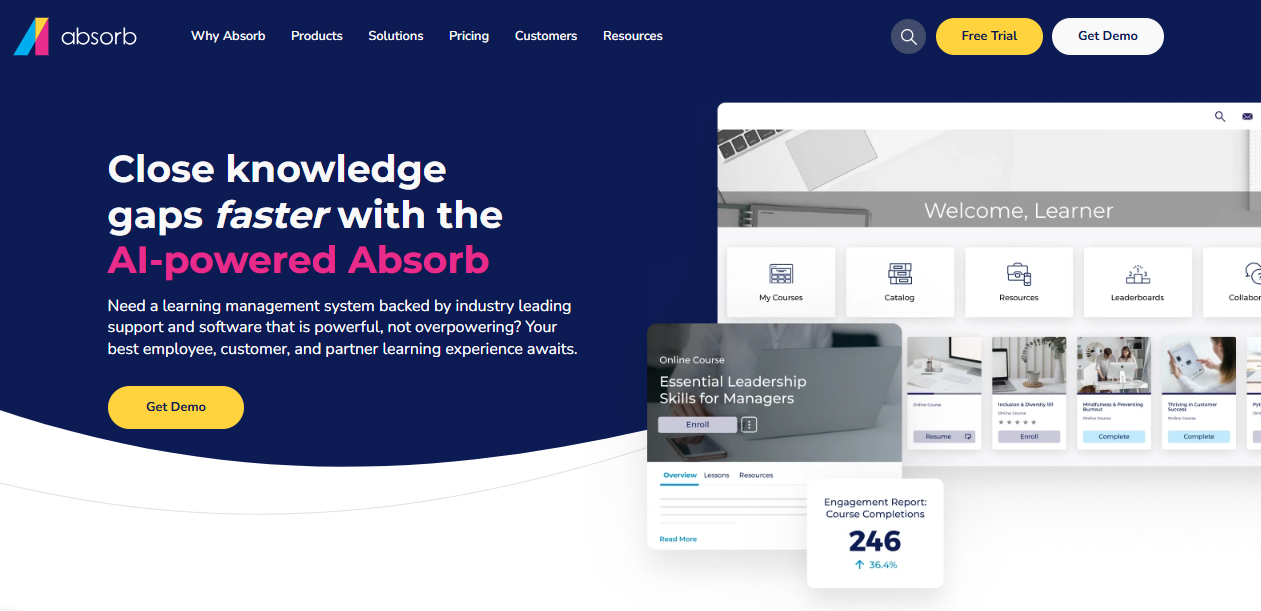
The Smart Course Builder generates role-specific adaptive learning paths quickly, which matters when you’re building different development tracks for frontline managers, mid-level directors, and senior executives simultaneously.
Analytics dashboards are robust enough to satisfy enterprise compliance training requirements across regulated industries. HRIS integration documentation is thorough and well-supported. For organizations comparing the best digital workplace training platforms for senior executives at scale,
Absorb sits comfortably in the enterprise tier. The honest limitation: it’s more platform than most organizations under 500 people actually need, and the implementation timeline reflects that investment. Evaluate it seriously if you have a real L&D function with dedicated staff; skip it if you need something live in two weeks.
Pros:
- Smart Course Builder generates role-specific leadership tracks efficiently at scale
- Enterprise-grade analytics dashboards and compliance training reporting
- Strong HRIS integration with documented support
- Scales across large learner populations with diverse training needs
Cons:
- Implementation complexity and cost are higher than mid-market alternatives
- Heavier than necessary for smaller organizations or simpler training programs
Pricing: Custom pricing based on organization size and feature requirements.
8. Chronus – Best for DEI-Focused Leadership Pipeline Development
Chronus takes a direct position that most leadership development platforms sidestep: who gets access to mentoring and sponsorship opportunities is itself a leadership problem that software should help solve.
The MatchIQ algorithm actively surfaces mentoring connections across neurodiversity, gender, ethnicity, and background, designed to interrupt the pattern where high-profile mentoring relationships tend to replicate existing networks.
Program reporting includes DEI-specific outcome metrics rather than generic engagement counts, so you can measure inclusion as an outcome rather than just an intention.
For organizations where building a diverse leadership pipeline is a concrete strategic commitment backed by executive accountability, Chronus provides the infrastructure to systematically track that commitment. The limitation worth naming: the platform produces data. Acting on it requires organizational will that no software can supply.
Pros:
- MatchIQ algorithm reduces unconscious bias in mentor-mentee pairing
- DEI-specific outcome reporting makes inclusion measurable, not just stated
- Handles mentoring, coaching, and employee resource group programs in one system
- Strong reference list across regulated industries and large enterprises
Cons:
- More specialized than general-purpose LMS platforms; best paired with a content tool
- Platform value depends on organizational commitment to act on what the data shows
Pricing: Custom pricing based on organization size.
9. TalentLMS – Best for Fast Deployment at SMB Scale
TalentLMS earns its place on this list for one specific, clearly defined use case: you need leadership training software that works, is intuitive, and can be live in days rather than months.
The setup process is faster than any enterprise-grade alternative. The interface is clean enough that non-technical administrators can manage it without requiring training on the training software, which is its own category of irony worth avoiding.
TalentLibrary provides a solid pre-built course catalog covering core leadership and management topics to get programs started without building from scratch. Where TalentLMS runs thin is enterprise depth: advanced analytics dashboards, multi-portal LMS configurations, and deep HRIS integration are not where it competes.
As the best leadership training software for corporate mentorship programs at SMB scale, though, it’s practical, affordable, and actually gets used because the UX doesn’t fight you.
Pros:
- Fast setup; functional training environment can go live in days
- Clean, intuitive interface for non-technical administrators and learners
- TalentLibrary offers pre-built leadership course content ready to deploy
- Good mobile experience across devices
Cons:
- Analytics and reporting are lighter than enterprise LMS platforms
- Less suited for complex multi-portal LMS configurations or deep HRIS integration
Pricing: Plans start at $69/month for up to 40 users. Per-user pricing for larger teams.
10. Qooper – Best for Structured Mentoring With Minimal Administrative Overhead
Running a formal mentoring program without a dedicated program manager is one of those tasks that sounds reasonable in a planning meeting and quietly becomes someone’s second full-time job within a quarter.
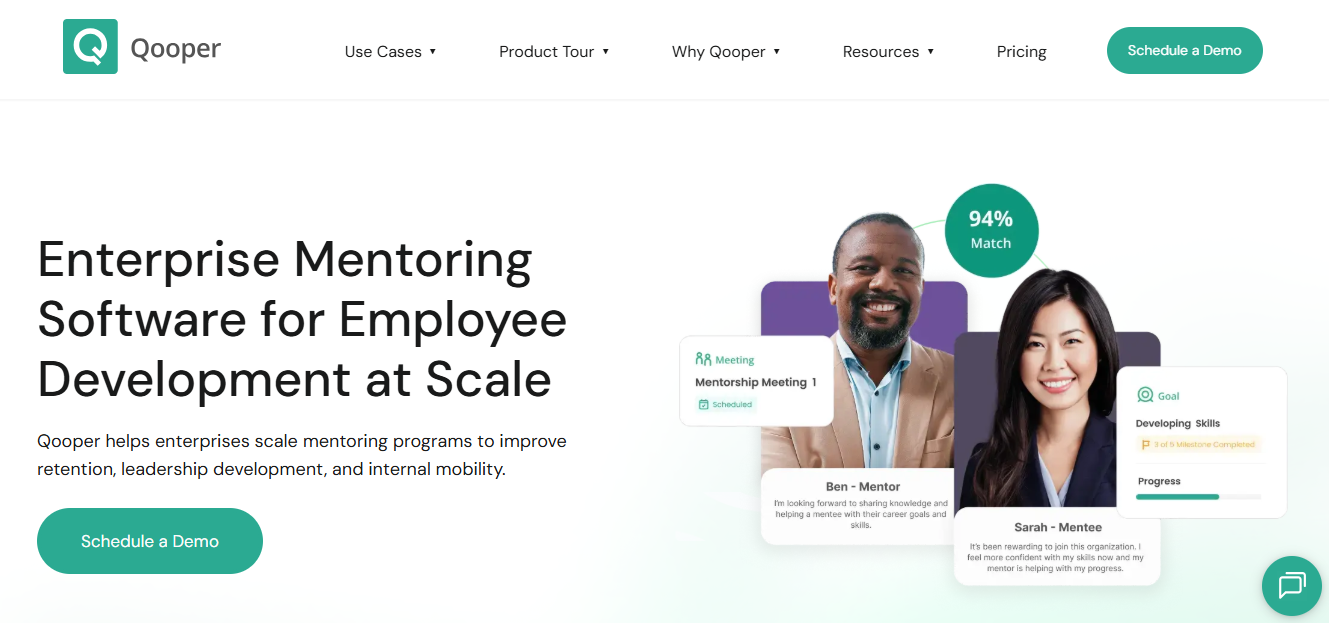
Qooper is built to prevent exactly that. The platform provides a template library for six-month development curricula, goal-setting frameworks, and structured check-in sequences so you’re not rebuilding program architecture from scratch every cohort.
Automated nudges and deadline reminders keep relationships active without requiring manual tracking across every pairing. Goal tracking is embedded into the mentoring workflow rather than living in a separate reporting module.
For small L&D teams or HR generalists running mentoring as one piece of a much larger job description, this is the closest thing to a program that manages itself. The limitation is the same as other mentoring-focused platforms: Qooper handles relationships, not content delivery, so it needs to sit alongside an LMS if course-based leadership training is also part of the strategy.
Pros:
- Extensive curriculum and goal-setting templates reduce setup time significantly
- Automated nudges maintain mentoring momentum without manual follow-up
- Goal tracking is integrated into the mentoring workflow, not a separate reporting exercise
- Designed for small L&D teams with limited bandwidth for program administration
Cons:
- No native course authoring or content delivery capabilities
- Lighter analytics than enterprise mentoring platforms like MentorcliQ
Pricing: Custom pricing based on organization size and program needs.
My Top 3 Picks
If you need a starting point rather than a full evaluation exercise, here’s where I’d direct you.
For most organizations, building leadership training from scratch: ProProfs Training Maker. The free plan is real, the AI course builder genuinely saves time, the 500+ pre-built courses cover the most common leadership development needs, and the analytics dashboards tell you whether anything is working. It’s not the flashiest platform on the list. It’s the most practical.
For enterprise organizations where formal mentoring is the core strategy: MentorcliQ. If your development program is built around connecting people rather than delivering content, use software that’s actually built for that. The SMART Matching algorithm and engagement tracking are a full tier above what general LMS platforms offer for mentoring programs specifically.
For teams that need something live fast: TalentLMS. It won’t win any awards for depth, but it works, it’s intuitive, and it doesn’t require a six-month implementation cycle to get off the ground.
How I Evaluated These Platforms
Five criteria, applied consistently across every platform on this list.
1. Applied practice, not passive content delivery: Does the platform let leaders practice difficult situations before those situations happen with real employees? Branching scenarios, roleplay simulations, and scenario-based assessments separate platforms that produce behavior change from those that produce certificates.
2. Accountability mechanisms: What happens after someone finishes a course? Is there a follow-through model, a relationship health check, an automated nudge? Platforms that stop at completion tracking measure effort. Platforms with accountability loops measure outcomes.
3. Customization by role and context: A senior engineering manager and a frontline retail supervisor share almost nothing in their day-to-day leadership challenges. Platforms that support different tracks for different roles produce better results than those serving everyone the same curriculum.
4. Integration with existing workflows: Leadership training software that adds a separate login and a separate mental context switch to an already full workday gets ignored. HRIS integration, SSO, and compatibility with tools your teams already use are practical requirements, not nice-to-haves.
5. Reporting depth beyond completion rates: Knowing 87% of people finished the course tells you almost nothing about whether anyone is leading differently. I prioritized platforms with analytics dashboards that surface skill gap data and tie assessment results to observable development indicators.
What Features Should Modern Leadership Training Software Include?
The category has changed. Here’s what separates platforms that keep up from those that don’t.
AI-Driven Personalization
Static learning paths assigned by role or seniority are becoming a baseline expectation. The platforms worth evaluating in 2026 use AI-driven learning to adapt course sequences based on assessment results, completion patterns, and identified skill gaps. The difference in practice: a first-time manager who’s strong on strategic communication but weak on conflict resolution gets a different path than one with the inverse profile.
Multi-Portal LMS Configurations
For organizations training employees, contractors, and external partners on leadership frameworks, a single-portal setup creates access and branding problems. Multi-portal LMS functionality lets you serve different audiences with different course libraries, branding, and reporting structures from one administrative backend.
Skills Mapping and Gap Analytics
Skills mapping ties training content to specific, measurable leadership competencies rather than course topics. When combined with pre and post-assessments, it turns “completed leadership training” into “improved conflict resolution score by two levels”, a distinction that matters considerably when you’re reporting development outcomes to an executive team.
Gamification Features That Drive Genuine Engagement
Gamification in learning is frequently dismissed as superficial, and frequently implemented in a way that deserves that dismissal. Done properly, with badges tied to real skill demonstrations, leaderboards that reflect meaningful progress, and points systems that reward depth over speed,gamification features measurably increase completion rates and content retention.
Compliance Training With Audit Trails
For organizations in regulated industries, compliance training isn’t optional. Platforms that support completion audit trails, automated re-enrollment, and certification tracking remove significant administrative overhead from HR teams managing regulatory requirements alongside development programs.
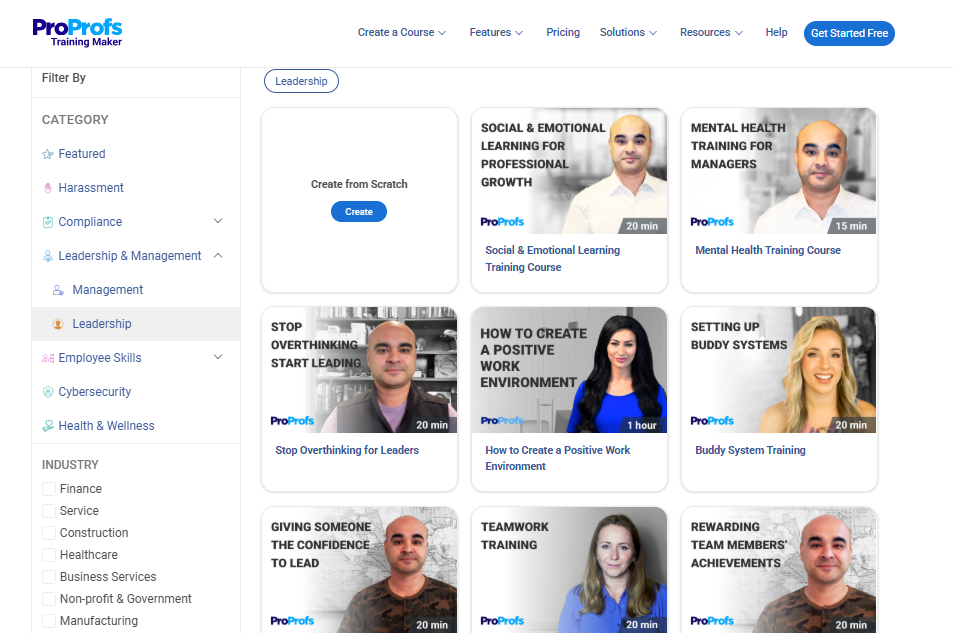
Shall I make your life a bit easier? Here, check out some exper-built, ready-to-use ProProfs Leadership Training Courses:
How to Pitch Leadership Training Software to Your CFO
The content-to-decision gap in this category is real. Most HR leaders know what they want. The difficulty is making the business case to someone who thinks in revenue and risk, not learning outcomes.
Frame It as Risk Reduction First
According to the U.S. Bureau of Labor Statistics, the median tenure of employees in management roles is under four years. High manager turnover is expensive in replacement costs and in the productivity loss of the teams they leave. Structured leadership development tied to retention is a defensible risk-reduction investment, not a discretionary spend.
Quantify the Status Quo
The implicit cost of doing nothing becomes visible only when someone does the math. If your managers are currently developing through trial and error at their team’s expense, which is what the absence of structured training produces, estimate what one failed manager costs in team attrition, productivity loss, and rehiring. The number is almost always higher than the annual license cost of a leadership training platform.
Lead With Per-Learner Numbers
“We want to buy leadership training software,” sounds expensive. “We want to spend $1.99 per active learner per month to give our 50 managers structured development, completion tracking, and a compliance audit trail” sounds like a procurement decision. The per-learner framing works because it makes the cost proportional and concrete.
Propose a Bounded Pilot
A six-month pilot with one manager cohort, a defined success metric, and a review gate is easier to approve than an open-ended platform subscription. Define what success looks like before the pilot starts: pre and post-competency assessments, manager retention in the cohort versus a control group, or reduction in HR escalations from that team. Numbers before and after create the case for renewal.
Your Leadership Pipeline Doesn’t Build Itself
The research on leadership development is consistent: the skills that determine whether someone succeeds as a leader are learnable, but only through practice, feedback, and accountability. Software doesn’t replace that process. It either supports it or it doesn’t.
The platforms on this list all support it in different ways, for different team types, at different price points. The best leadership training software for your organization is the one that fits your actual workflow, not the one with the most impressive demo.
If you’re starting from scratch or replacing a fragmented DIY stack of slides and spreadsheets, ProProfs Training Maker is where I’d begin. The free plan exists specifically so you can build something real before committing to a paid seat.
Frequently Asked Questions
What is leadership training software?
Leadership training software is a digital platform that creates, delivers, and tracks structured development programs for current and future leaders. It typically includes course authoring, mentoring workflows, assessments, and analytics dashboards to help organizations build leadership capability consistently rather than ad hoc.
What is the best leadership training software for corporate mentorship programs?
ProProfs Training Maker is the strongest all-in-one option, combining AI-powered course creation with structured mentoring support and analytics. For dedicated mentoring program management, MentorcliQ and Together Software are purpose-built alternatives worth evaluating.
How much does leadership training software cost?
Pricing ranges from free (ProProfs Training Maker) to $5-$8 per user per month for mid-market platforms, up to custom enterprise pricing for Absorb LMS and Chronus. Per-learner pricing models are typically more cost-effective for smaller or variable-size cohorts.
What features matter most in enterprise-ready mentorship software for leadership training?
Algorithm-based mentor matching, relationship health monitoring, goal tracking integrated into the mentoring workflow, HRIS integration, and analytics dashboards that track engagement trends over time rather than just pairing completion counts.
How do I evaluate LMS scalability for enterprise leadership training?
Look for multi-portal LMS support, HRIS integration depth, role-based access controls, and reporting that handles large learner populations without manual data exports. Ask vendors specifically how the platform performs at two to five times your current learner count.
What is the role of AI in modern leadership training software?
AI-driven learning in this category handles three things: generating course content from plain-language prompts, personalizing adaptive learning paths based on assessment results, and matching mentors to mentees based on goals and personality rather than availability alone.
What are the benefits of AI-driven personalization in corporate LMS platforms?
Adaptive learning paths ensure leaders work on the skills they actually need rather than completing a generic curriculum. According to McKinsey's research on learning and development (2023), personalized learning programs produce measurably higher skill retention than standardized content delivery.
How do top leadership training software platforms support onboarding and succession planning?
The strongest platforms combine role-specific learning paths for new managers with skills-mapping to identify high-potential employees for succession tracks. Completion audit trails and certification tracking provide the documentation HR teams need to demonstrate development progress to leadership.
Let ProProfs AI create your training course

 We'd love your feedback!
What did you like & how can we make it even better?
 Thanks for your feedback!
 Ask Your Question
Have a question? Get expert help to make your decision easier.