

I got looped into an “urgent” LMS migration two years ago because our partner training portal had quietly stopped scaling somewhere around user number four thousand. Nobody had noticed.
Renewals were still coming in, certificates were still generating, but the admin panel took eleven seconds to load a course catalog, and support tickets from resellers were piling up in a queue nobody owned. That’s the moment you learn, the hard way, that an internal-facing LMS and a real external LMS are not the same category of software, no matter what the sales deck says.
Since then, I’ve implemented, migrated off of, or evaluated most of the platforms built for training people outside your payroll: customers, partners, resellers, contractors, the whole extended cast. This list is what I’d actually tell you if you called me before signing a contract, not a rewritten spec sheet.
This guide is for:
- L&D professionals and training managers building programs for external audiences
- HR teams training contractors, franchisees, or gig workers
- Customer success and enablement teams delivering paid or partner certification programs
- Anyone comparing external training LMS options before a renewal or a first-time purchase
What Is an External LMS, Really?
Most training platforms started life solving a narrower problem: get training in front of employees who already share your HR system, your email domain, your assumptions about who reports to whom. An external LMS is a different animal. The moment you’re issuing 300 partner logins to people who’ve never used your HRIS, or launching a graded certification course to 5,000 paying customers, the internal playbook falls apart.
Branding, data isolation, billing, and reporting all need to work per audience, not just per company. Some vendors market this as an “external learning LMS” or “extended enterprise LMS,” but the label matters less than whether the architecture actually holds up past a few hundred non-employee users.
The 10 Best External LMS Platforms, Compared
I’m not going to pretend every platform on this list solves the same problem equally well, so before the deep dives, here’s how they stack up on the numbers that actually move a shortlist forward.
| Tool | Best For | Capterra Rating | Starting Price |
|---|---|---|---|
| ProProfs Training Maker | Easy course creation for training customers, partners, and resellers | 4.6 | Free (up to 10 learners); $1.99/learner/mo |
| Docebo | Large-scale partner networks | 4.4 | Custom quote |
| Absorb LMS | Multi-tenant reseller and franchise training | 4.5 | Custom quote |
| Adobe Learning Manager | Enterprise customer and seller education | 4.3 | Custom quote |
| Intellum | Enterprise brands training millions of external learners | 4.6 | From $25,000/year |
| LearnUpon | Segmented partner and customer portals | 4.7 | Custom quote (150 active users minimum) |
| Skilljar | Monetized customer education | 4.6 | From $30,000/year |
| TalentLMS | Affordable option for growing mid-market teams | 4.7 | Free plan; paid plans from $149/month |
| Thought Industries | Revenue-generating customer academies | 4.5 | Custom quote |
| WorkRamp | Combined customer education and sales enablement | 4.5 | Custom quote |
1. ProProfs Training Maker – Best for Easy Course Creation for Training Customers, Partners, and Resellers
If I’m being upfront about where I land on this list, it’s here. ProProfs Training Maker is the platform I point most training teams toward first, mainly because of how it handles the one part of external training everyone underestimates: getting content built fast enough to keep up with a growing partner or customer base.
The AI course builder does exactly what it sounds like. You describe the course you need, and it drafts the structure, content, and quiz questions in minutes, which matters more than it sounds like it should when you’re standing up training for a new reseller region on a two-week deadline.
It’ll also turn existing PDFs, slide decks, or documents into structured lessons through AI-powered content generation. You can try it out below, just type the course you want and wait for the AI to do its thing.

Let ProProfs AI create your training course
Beyond the AI layer, you get 500+ expert-built, ready-to-use compliance and skills courses, gamification, SCORM and Tin Can API support, and reporting that gives you a real audit trail for external certifications. Support for 70+ languages and role-based branding covers most of what an extended, non-employee audience actually needs.
Pros:
- AI course builder cuts course production time significantly
- 500+ expert-built, ready-to-use courses covering compliance, safety, and skills topics reduce build-from-scratch work
- Real-time tracking with exportable, audit-ready reports
- Transparent, published pricing; no sales call required
- 70+ language support for multilingual or contractor-heavy workforces
Cons:
- No dark mode for low-light environments
- No offline or on-premise deployment; cloud-only
Pricing: Free trial available (up to 10 learners). Paid plans start at $1.99 per active learner/month.
2. Docebo – Best External LMS for Large-Scale Partner Networks
Docebo is the platform I’d point enterprise teams toward when the partner network is already large and getting larger. It’s built for organizations running ongoing education programs across dozens or hundreds of external groups, with real controls for branding and personalizing content differently per audience.
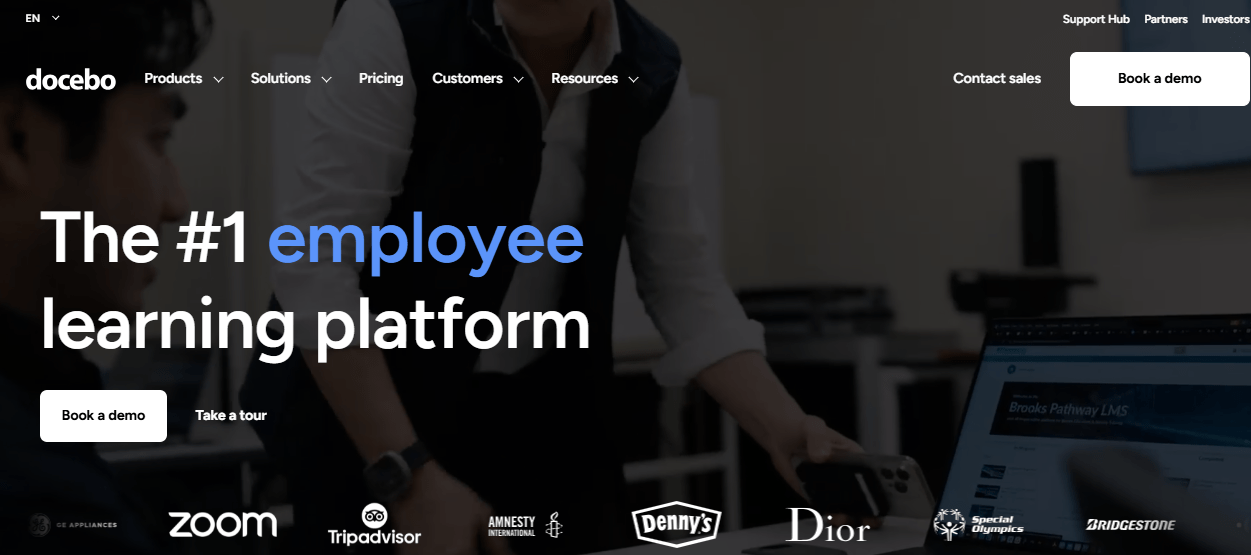
What I appreciate is the learner activity dashboard, which gives admins and learners a clear read on where things stand without digging through five separate reports.
The tradeoff is setup. Docebo’s ease-of-setup scores consistently lag its other categories in reviews, and more than one implementation I’ve seen took months longer than planned because the platform rewards configuration depth you actually have to learn. Its native authoring tool is also still catching up to dedicated content tools, so budget for pairing it with something else if your team builds a lot of original content in-house.
Pros:
- Scales well across many distinct external audiences
- Strong reporting dashboards and a wide integration ecosystem
- Well-suited to complex, multi-region partner programs
Cons:
- Longer, more complex implementation than most of this list
- Native authoring tool is still relatively basic
- Pricing isn’t published anywhere; expect a sales cycle
Pricing: Custom quote only
3. Absorb LMS – Best External LMS for Multi-Tenant Reseller and Franchise Training
Absorb earns its spot for one specific strength: multi-tenant setup done well. If you’re training resellers, channel partners, or franchise locations that each need their own branded, walled-off portal, this is one of the few platforms where that isn’t a bolt-on feature.
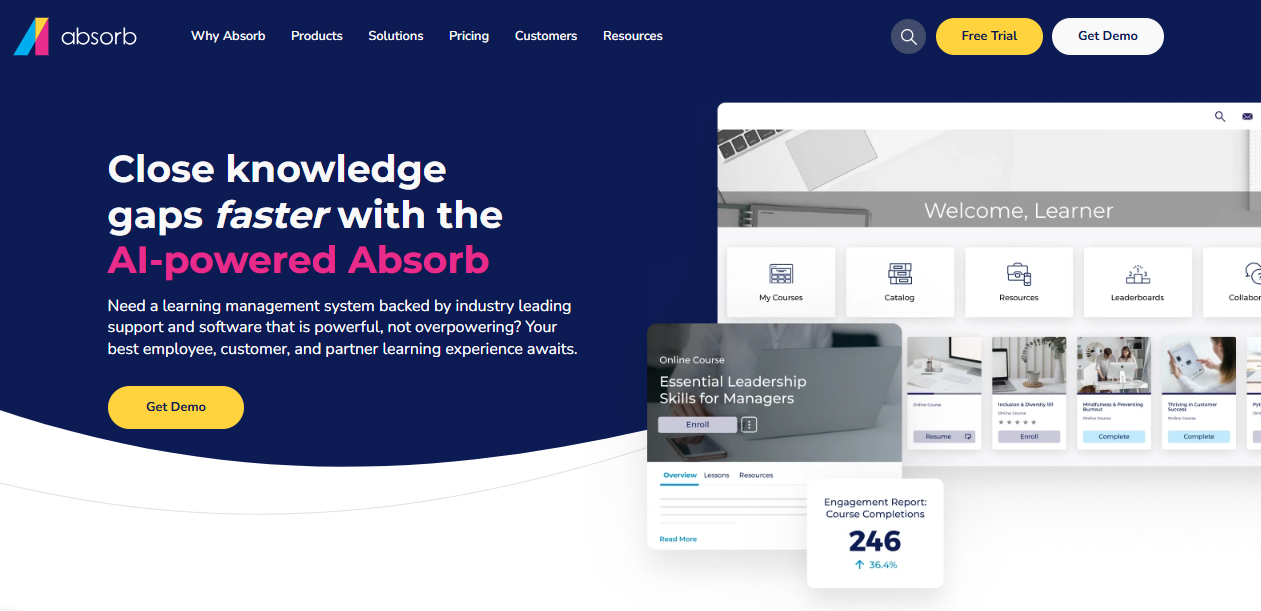
The real-time dashboard tracking enrollment and progress across internal and external audiences at once is genuinely useful when you’re reporting up to leadership on both at the same time. Reviewers consistently flag the interface as one of the more intuitive ones on this list, which matters when you’re onboarding non-technical franchise owners who will never read a manual.
The catch is cost. Deeper data analytics live behind an add-on module, and more than one reviewer mentioned the total price climbing fast once you’re past the base tier.
Pros:
- Genuine multi-tenant, branded portal support for resellers and franchisees
- Intuitive interface, well-suited to non-technical external admins
- Strong customer support reputation
Cons:
- Advanced data analytics cost extra
- Pricing rises quickly at scale, per multiple reviews
Pricing: Custom quote only
4. Adobe Learning Manager – Best External LMS for Enterprise Customer and Seller Education
Adobe Learning Manager (formerly Captivate Prime) is built for exactly the kind of scale most external LMS platforms only claim to handle.
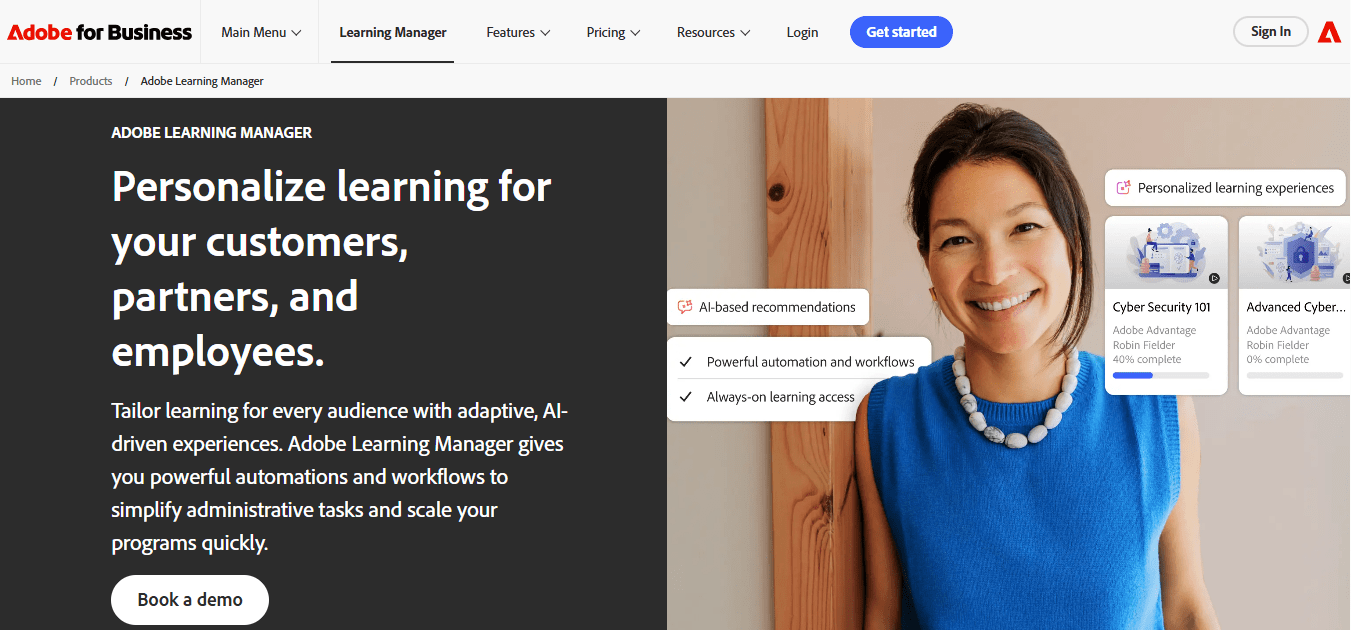
It’s used across a reported 15 million-plus external learners for customer education, seller training, and partner enablement, largely because it plugs directly into the rest of the Adobe Experience Cloud stack if you’re already living there.
That integration depth is the real pitch: content, analytics, and marketing automation sharing the same ecosystem. It’s also the reason ease-of-use reviews trail the rest of this list. Reviewers rate it noticeably lower on usability than nearly every other platform here, and the admin experience assumes a level of technical comfort a lot of training teams don’t have on day one. If you’re not already an Adobe shop, the onboarding curve is steeper than it needs to be.
Pros:
- Proven at genuinely massive scale with major enterprise brands
- Deep integration with the broader Adobe ecosystem
- Strong fit for seller and partner enablement programs
Cons:
- Lower ease-of-use ratings than most competitors on this list
- Steep learning curve outside the Adobe ecosystem
- Pricing isn’t published
Pricing: Custom quote only
5. Intellum – Best External LMS for Enterprise Brands Training Millions of External Learners
Intellum is the platform behind customer and partner education at companies like Meta, Google, and Pinterest, and it shows in how the product is built.
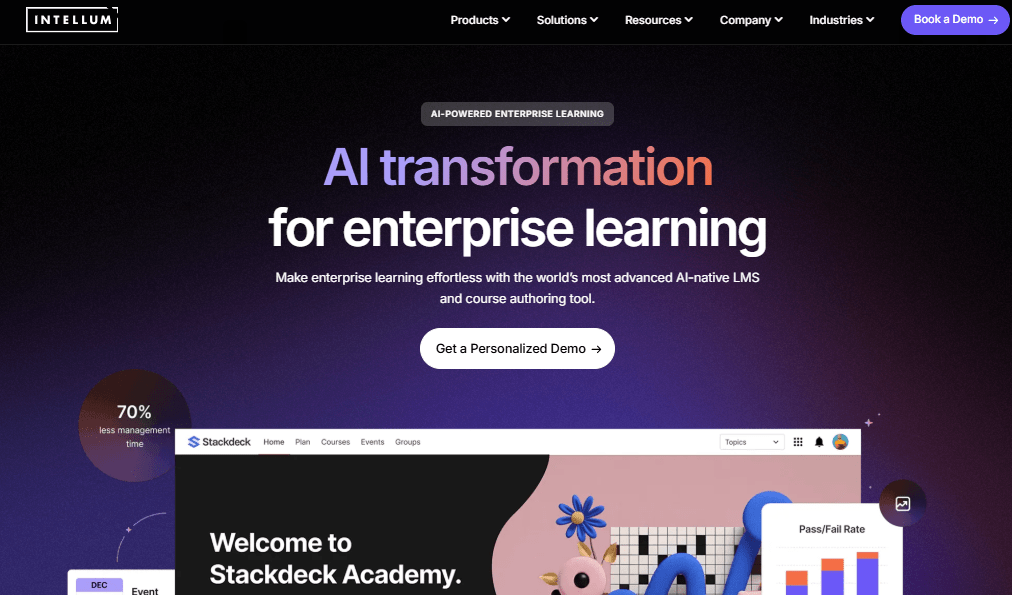
Nothing about it feels like a repurposed internal LMS. Everything from user journey tracking to social and community learning is built assuming your audience is external from day one.
The AI-powered architecture is genuinely more forward-looking than most of what’s on this list, particularly around personalizing content paths at scale. The honest limitation is who it’s actually for. Pricing starts around $25,000 a year on a usage basis, which puts it out of reach for most mid-market teams, and at least one reviewer specifically flagged the lack of native report visualizations as a gap given the price point.
This is a tool for organizations already operating at genuine enterprise scale, not a first external LMS.
Pros:
- Purpose-built for external-first education at real scale
- Strong AI-driven content personalization
- Proven track record with major enterprise brands
Cons:
- High entry price puts it out of reach for smaller teams
- Native reporting visualizations are limited relative to cost
Pricing: From $25,000/year, usage-based
6. LearnUpon – Best External LMS for Segmented Partner and Customer Portals
LearnUpon’s strength is in the plumbing most people don’t notice until it’s missing: dynamic rules and automated learning journeys that route the right content to the right external audience without an admin manually assigning it every time.

It’s mainly used by small and midsize businesses that need structured training across teams and partners without an enterprise budget, and reviewers consistently rate its ease of use and customer support well above category average. Multilingual support and API access mean it scales past a single-language, single-region rollout reasonably well.
Where it falls short is customization depth and reporting. Capterra’s own research notes both areas as limited compared to platforms built for larger, more complex external deployments, so if your reporting needs are genuinely enterprise-grade, this may not be the ceiling you want to build toward.
Pros:
- Strong automation for routing content by audience
- High marks for ease of use and customer support
- Solid multilingual and API support
Cons:
- Reporting depth and customization are limited at scale
- Pricing isn’t published; 150 active users is the typical starting point
Pricing: Custom quote (150 active users minimum)
7. Skilljar – Best External LMS for Monetized Customer Education
Skilljar is built almost entirely around one job: customer education you can charge for. If the plan is to launch a certification program, a paid academy, or gated product training that customers pay to access, this is one of the more purpose-built options on the list, and it shows in strong ease-of-use scores.
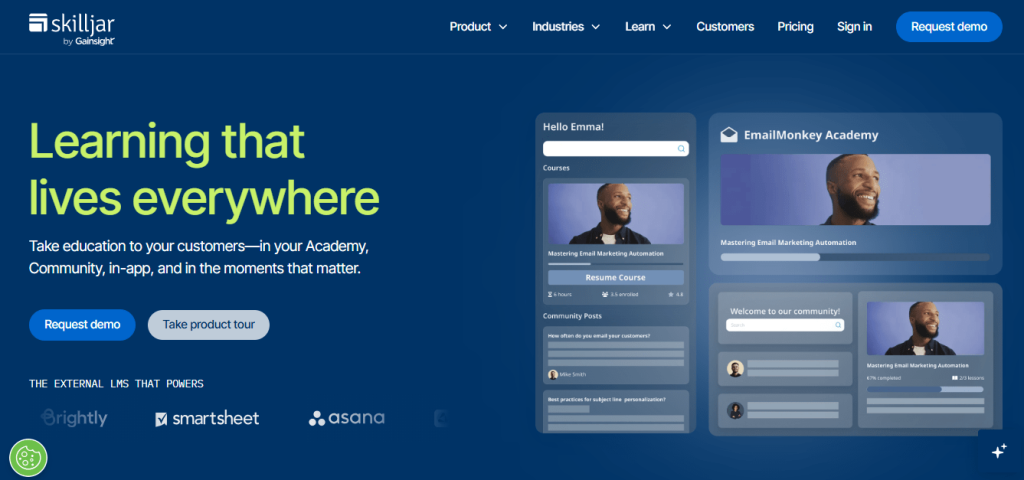
The tradeoff is price and focus. Skilljar starts around $30,000 a year, which puts it well above most of this list, and it’s not really built for partner or reseller portal management the way Docebo or Absorb LMS are. This is a customer education platform first, and everything else is secondary. If your external training need is broader than customer-facing courses, you’ll likely end up paying for capability you don’t use.
Pros:
- Purpose-built for monetized, customer-facing courses
- Strong ease-of-use ratings
- Clean, modern learner-facing experience
Cons:
- High starting price relative to the rest of this list
- Less suited to partner or reseller-specific portal needs
Pricing: From $30,000/year
8. TalentLMS – Best Affordable External LMS for Growing Mid-Market Teams
TalentLMS is the one I recommend when a team needs external training LMS capability now, on a budget that doesn’t require a procurement committee. Its branches feature lets you spin up separate portals for employees, customers, and partners under one account, useful for a company like ShopGoodwill running training across 130-plus partners without needing a full enterprise platform to do it.
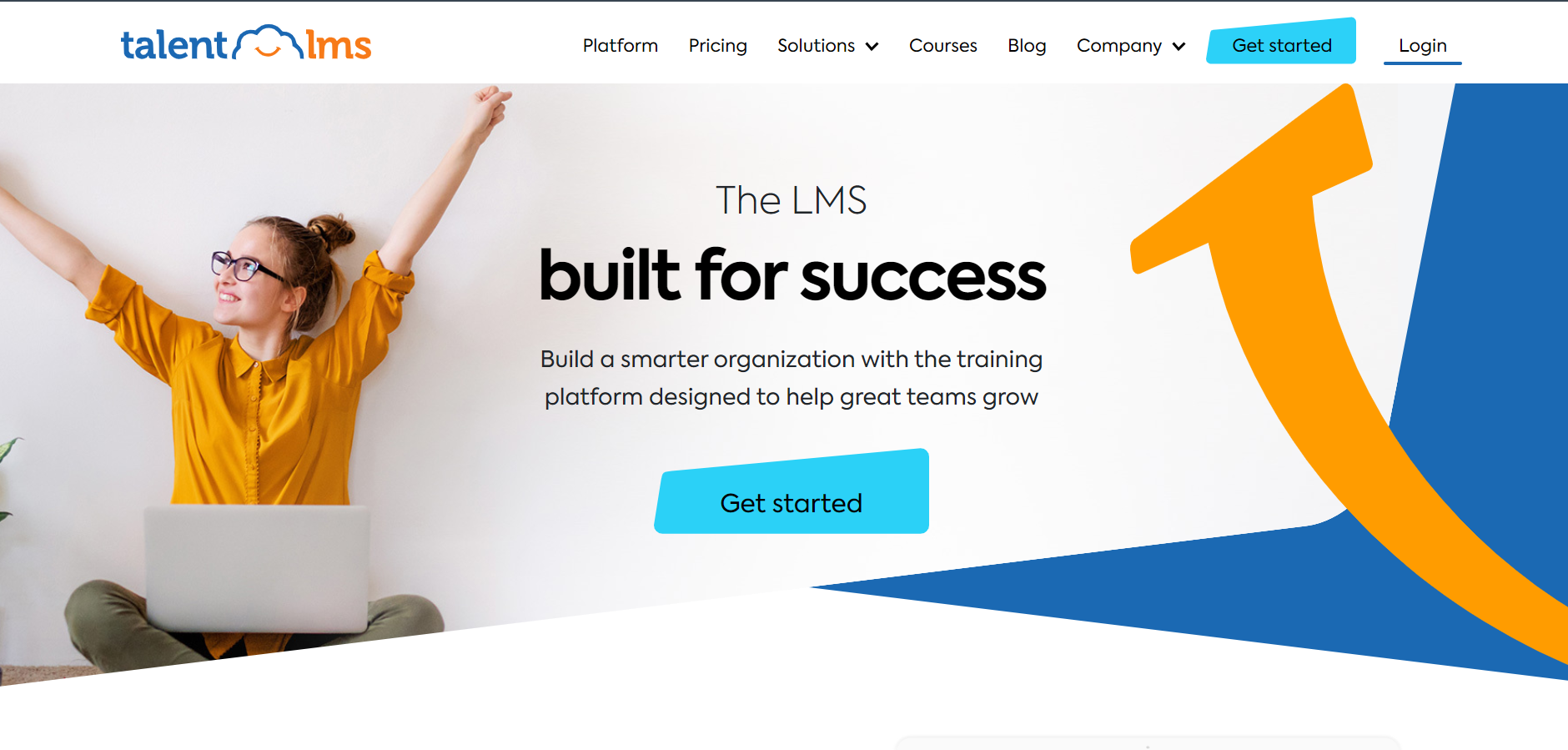
Pricing starts at $149 a month with a free tier to test on, a fraction of what most of this list charges. The honest limitation is depth. Branches solve the audience-separation problem reasonably well, but the platform wasn’t built ground-up as an extended enterprise LMS the way Docebo or Absorb were, so very large or highly complex partner networks may eventually outgrow it.
Pros:
- Affordable, transparent pricing with a genuine free tier
- Branches feature meaningfully separates external audiences
- Fast to set up and get running
Cons:
- Less depth for very large or complex partner networks
- Not purpose-built as an extended enterprise LMS from the ground up
Pricing: Free plan available; paid plans from $149/month
9. Thought Industries – Best External LMS for Revenue-Generating Customer Academies
Thought Industries positions itself as the number one platform for B2B customer training, and the feature set backs that up. It’s a headless LMS, meaning the front-end learner experience can be built and branded almost however you want, with native eCommerce baked in for organizations that want training to generate revenue, not just goodwill.
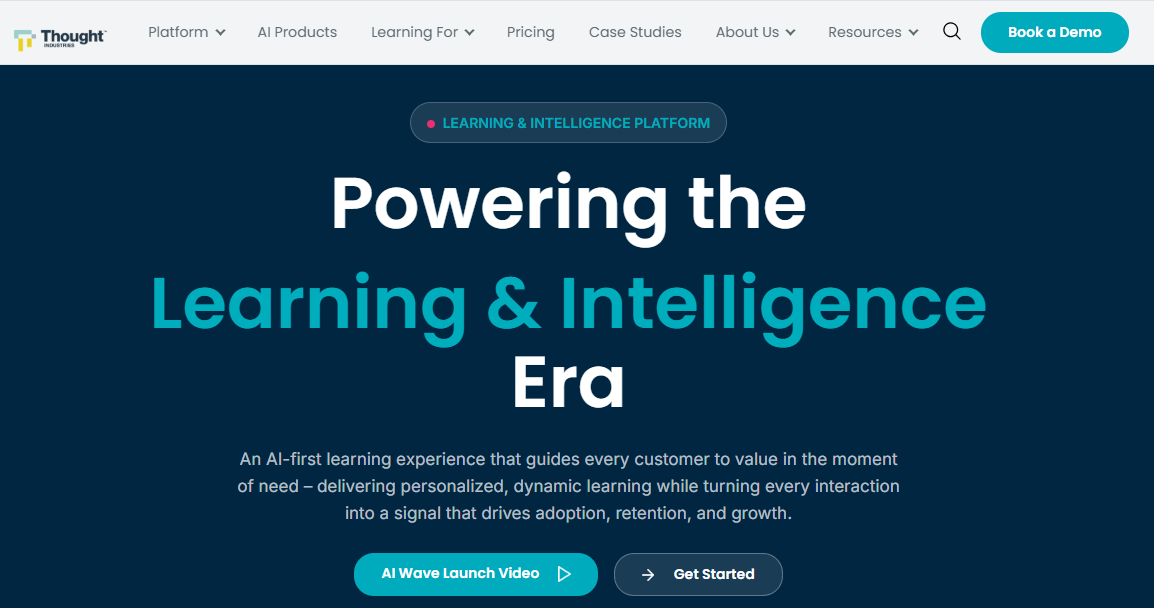
One reviewer summed it up well: it lets you treat training like an actual business lever, tracking how it connects to retention and revenue instead of just completion rates. That flexibility comes with real overhead, though. Multiple reviews flag it as complex and resource-intensive to implement, requiring a clear strategy and internal capability most smaller teams don’t have on day one. Pricing is custom and, per reviewers, high.
Pros:
- Highly flexible, fully brandable learner experience
- Native monetization and eCommerce support
- Strong for tying training directly to revenue outcomes
Cons:
- Complex, resource-heavy implementation
- Pricing runs high and is fully custom
Pricing: Custom quote only
10. WorkRamp – Best External LMS for Combined Customer Education and Sales Enablement
WorkRamp sits in an interesting spot on this list because it wasn’t built purely as an external training platform. It grew out of sales enablement and onboarding, and that lineage still shows in how it’s used today, often for customer education that lives right next to internal sales training in the same account.
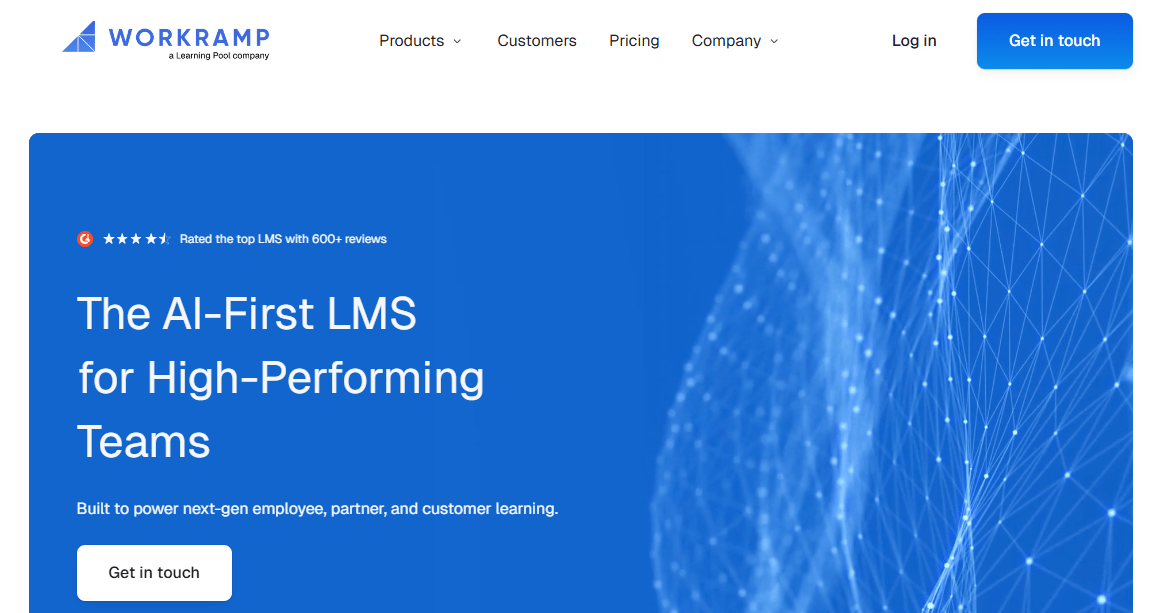
Reviewers consistently praise how fast it is to get running. One user noted it takes less than an hour to understand the fundamentals of course creation, which is rare for anything in this category. Centralized content management, where updating one resource updates it everywhere it’s linked, is a real time-saver for teams maintaining training across multiple audiences. What it doesn’t offer is the deep multi-org, multi-brand portal segmentation that platforms like Docebo or Absorb specialize in, so very partner-heavy programs may find it thinner than they need.
Pros:
- Fast setup and a genuinely low learning curve
- Centralized content management saves real maintenance time
- Strong fit for teams already using it for sales enablement
Cons:
- Less specialized for deep partner or reseller portal segmentation
- Pricing isn’t published
Pricing: Custom quote only
My Three Picks If You Don’t Want to Read All Ten
Fair enough. Here’s where I’d start depending on what you’re actually solving for.
Best overall: ProProfs Training Maker. For most teams training a mix of customers, partners, and internal staff without an enterprise IT department behind them, this is where I’d start. The AI course builder alone saves enough time to justify the switch, and the pricing doesn’t require a six-month approval cycle to test.
Best for enterprise partner networks: Docebo. If you’re already managing hundreds of external accounts and the constraint is depth of configuration, not budget, Docebo earns the complexity.
Best for monetized customer education: Skilljar. If the actual goal is charging customers for certification or product training, Skilljar is purpose-built for that specific job in a way generalist platforms aren’t.
How I Evaluated These Platforms
I didn’t rank these external training LMS options off feature checklists alone. Here’s what actually went into it:
- User reviews and ratings: I cross-referenced ratings and recurring complaints across Capterra and G2 rather than trusting any single source, weighting patterns across dozens or hundreds of reviews over any one glowing or furious outlier.
- Multi-audience segmentation: Whether the platform can genuinely separate branding, content, and reporting for different external groups, not just add a second login screen.
- AI features and automation: How much of the content creation, personalization, and admin workload the AI actually removes, versus what’s just labeled “AI-powered” in the marketing copy.
- Ease of use and setup: How long it realistically takes a non-technical admin, not a trained implementation specialist, to launch a working course.
- Pricing transparency: Whether pricing is public or requires a sales call, and whether cost scales sensibly with external, often partially inactive, user bases.
- Compliance and reporting depth: Whether the platform can produce a real audit trail for regulated or certification-based external training.
The Real Question Isn’t Which LMS. It’s Which Audience You’re Actually Training First.
Every platform on this list can technically train someone outside your company. The difference is what breaks first when you scale past a hundred external users, and that’s rarely the feature you tested in the demo. It’s usually reporting, or pricing, or how much manual work an admin has to do to keep three audiences separate without them ever seeing each other’s content.
If I had to leave you with one thing, it’s this: don’t pick based on the tool your competitor uses. Pick based on which of these problems you’re most likely to hit first, whether that’s a partner network outgrowing manual enrollment, a customer academy that needs to pay for itself, or a compliance program that can’t survive an incomplete audit trail. Start there, test the shortlist against your actual worst-case scenario instead of the sales demo’s best case, and the right LMS for external training gets a lot easier to spot.
Frequently Asked Questions
What is the difference between an LMS and an external LMS?
A standard LMS is usually built for internal employees who share your HR system and login structure. An external LMS is designed to train customers, partners, resellers, or contractors, with separate branding, access controls, and reporting for each audience.
What features matter most in an external LMS?
Multi-tenant or branded portals, flexible provisioning for non-employees, segmented reporting, and pricing that doesn't punish you for inactive external users matter more than a long feature list. Most failures come from architecture gaps, not missing buttons.
How much does an external LMS cost?
Pricing ranges widely. TalentLMS starts around $149 a month, ProProfs Training Maker has a free plan and paid tiers from $100 a month, while enterprise platforms like Skilljar and Intellum start between $25,000 and $30,000 a year.
Can I use a regular LMS for external training instead?
You can, but most internal-first platforms weren't built for it. Expect friction around branding separate audiences, managing non-employee identities, and reporting that rolls up across groups without leaking data between them as your external audience grows.
What is the best LMS for external training on a smaller budget?
ProProfs Training Maker and TalentLMS are both reasonably priced and quick to set up, with free plans to test before committing. Both include branch or portal features that separate external audiences without enterprise-level complexity or cost.
Is Docebo good for external training?
Yes, particularly for large organizations managing many external partner accounts. Docebo handles scale and branding well, though setup is more involved than lighter platforms, and its native authoring tool is less developed than dedicated content tools.
Do external LMS platforms support compliance training?
Most do, but audit trail depth varies. ProProfs Training Maker, Docebo, and Absorb LMS all offer completion tracking and reporting built for compliance use cases, which matters if you need to prove training happened during an audit.
Let ProProfs AI create your training course

 We'd love your feedback!
What did you like & how can we make it even better?
 Thanks for your feedback!
 Ask Your Question
Have a question? Get expert help to make your decision easier.