I’ve seen this situation play out more than once. An auditor asks for proof that every clinician on a unit completed HIPAA retraining on schedule, and the compliance manager opens a spreadsheet that hasn’t been touched since March. Nobody lied. The reminder emails just stopped going out, and nobody noticed until someone with a badge and a clipboard was standing in the doorway.
That’s the specific fear a regulated industry LMS is supposed to solve, and most of them solve it in ways that create three new problems on the way to fixing one. I’ve spent a long time evaluating training platforms built for healthcare, pharma, manufacturing, and finance, and this list is my honest read on which ones hold up when a regulator, not a demo rep, is asking the questions. If you’ve searched for the best LMS for regulated industries and gotten decision fatigue instead of clarity, this is built to fix that.
This guide is for:
- Compliance managers who need audit-ready proof, not promises
- L&D leaders juggling certification expiry across multiple sites
- HR professionals standardizing onboarding in healthcare, pharma, finance, or manufacturing
- Business owners who inherited a spreadsheet-based training program and want out
What Is a Regulated Industry LMS?
Most LMS platforms treat compliance as one feature among many. A genuine regulated industry LMS treats it as the whole point, and everything else, gamification, social learning, and course marketplaces, gets built around that core. When people search for the best LMS for regulated-industry compliance, they’re rarely asking which platform offers the most features. They’re asking which one will still be defensible when someone external checks the work.
10 Best LMS Platforms for Regulated Industries in 2026
I didn’t rank these by feature count. A platform with forty integrations and no audit trail is worse than one with five integrations and a report an auditor actually trusts. Every one of these made the list because they specifically compete for teams searching for the best LMS for compliance training in regulated industries, not just general LMS buyers. Below is the fast comparison, then the full breakdown of why each one earned its spot.
| Tool | Best For | Capterra Rating | Expert-Built Course Library | AI-Powered Reporting |
|---|---|---|---|---|
| ProProfs Training Maker | World’s easiest Enterprise compliance training with a ready-to-use course library | 4.8/5 | 500+ courses | Yes |
| Cornerstone OnDemand | Large multinational regulated enterprises | 4.1/5 | Licensed marketplace | Yes |
| Docebo | Complex multi-country compliance programs | 4.4/5 | 30,000+ marketplace | Yes |
| Absorb LMS | AI-automated compliance administration | 4.5/5 | Via integrations | Yes |
| SAP Litmos | Prebuilt regulatory content libraries | 4.2/5 | Prebuilt library | No |
| MedTrainer | Healthcare-specific compliance and credentialing | 4.3/5 | 350+ courses | No |
| Relias | Healthcare and life sciences workforce compliance | 3.9/5 | 1,500+ courses | No |
| Vector LMS for Industrial | Manufacturing and EHS safety compliance | 4.6/5 | Safety course library | No |
| iSpring Learn | Fast setup on a tight compliance budget | 4.7/5 | No | No |
| TalentLMS | Lightweight, right-sized compliance tracking | 4.7/5 | Add-on library | No |
1. ProProfs Training Maker – World’s Easiest LMS & Course Builder for Employee Training, Compliance & Skill Assessment
ProProfs Training Maker earns the top spot on this list because it treats compliance training as something an enterprise regulated team shouldn’t have to build from a blank screen every time a policy changes.
The platform ships with a library of 500+ expert-built, ready-to-use courses that AI can customize to your specific policies, and for a regulated industry LMS, that is a genuinely different starting point from handing a subject-matter expert a blank authoring tool and a deadline.
The AI course creation tool is where this earns its spot for regulated industries specifically. Type “create a HIPAA privacy refresher for front desk staff” and the AI drafts a structured course you edit rather than build from a blank screen.

Let ProProfs AI create your training course
Instead of exporting raw data and building your own dashboard, the platform’s AI scans completion and engagement data the moment a report opens and surfaces the gaps that matter, which teams are trending toward non-compliance, before an auditor ever has to ask.
Pair that with automated certification expiry tracking, audit-ready completion reports, full data ownership with admin access across every account, and 70+ language support for multinational regulated workforces, and you get a platform built to run compliance training across a large, distributed enterprise without stitching together three separate point solutions.
Pros:
- Library of 500+ expert-built, ready-to-use courses that cut build time from weeks to hours for common compliance topics
- AI-powered reporting that surfaces completion gaps and engagement trends automatically, rather than handing admins a raw export
- Automated certification and license expiry tracking with reminders, so nobody discovers a lapsed credential during an audit
- Full data ownership with admin access across all accounts and reports, built for enterprise legal, compliance, and audit requirements
- 70+ language support for multi-site or multi-country regulated workforces
- SCORM support and full ownership of uploaded course content, no vendor lock-in on source files
Cons:
- Cloud-only, no on-premise or air-gapped deployment option for organizations with strict data residency rules
- No dark mode for low-light environments
Pricing: Free plan for up to 10 learners. Essentials starts at $1.99 per active learner per month, Business at $3.99, and Business Complete Elite at $4.98.
2. Cornerstone OnDemand – Best for Large Multinational Regulated Enterprises
Cornerstone OnDemand is what a 25,000-person pharmaceutical company reaches for when compliance has to run correctly across 40 countries and fifteen languages at once.
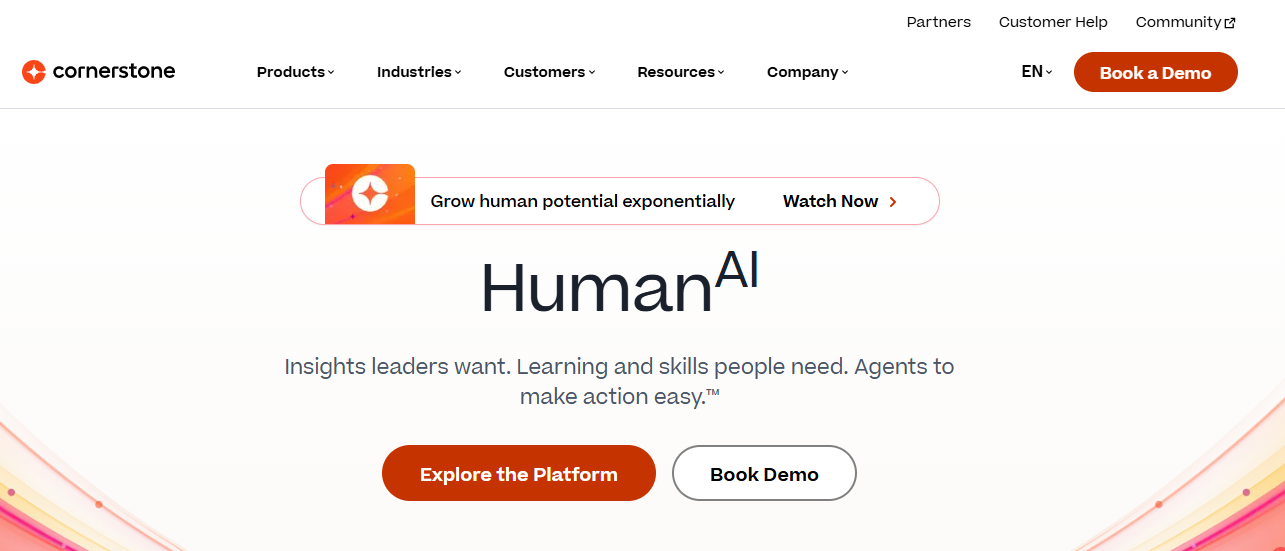
I would not recommend it to a 200-person clinic, and Cornerstone doesn’t really pretend otherwise. The depth is real: role-based curricula, the Content Anytime licensed course marketplace, and compliance reporting built for organizations that answer to multiple regulators at the same time.
What you’re paying for, beyond the software, is the implementation. Buyers consistently report five-plus month rollouts and a genuine need for a dedicated Cornerstone administrator on staff. Procurement data from Vendr puts the average annual contract north of $69,000, with per-employee pricing typically landing between $6 and $18 a month depending on whether you buy Learning standalone or the full Talent Suite. That’s a fair trade for a global life sciences company.
It’s a rough one for a mid-size regulated employer that just wanted defensible training records without hiring someone new to run the system.
Pros:
- Content Anytime marketplace gives instant access to licensed compliance courses instead of building every module internally
- Deep regulatory reporting built for multinational, multi-entity organizations
- Handles complex role-based curricula across large, distributed workforces
- Strong integration ecosystem for HRIS and talent suite modules
Cons:
- Implementation regularly takes five months or longer and usually requires a dedicated in-house administrator
- Pricing is quote-based and enterprise-scale, with typical annual contracts well into five figures
- Multiple reviewers describe the interface as cumbersome relative to newer platforms
Pricing: Custom, quote-based. Industry benchmarks put typical annual licensing in the $65,000 to $70,000 range before implementation and add-ons, with per-employee-per-month models also available for larger deployments.
3. Docebo – Best for Complex Multi-Country Compliance Programs
Docebo earns its place here on the strength of Shape, its AI content tool that turns dense compliance documentation into short, structured courses. I’ve seen the pitch of turning 500 pages of compliance policy into microlearning in days, and it is not an exaggeration. It is one of the more genuinely useful applications of AI on this entire list.
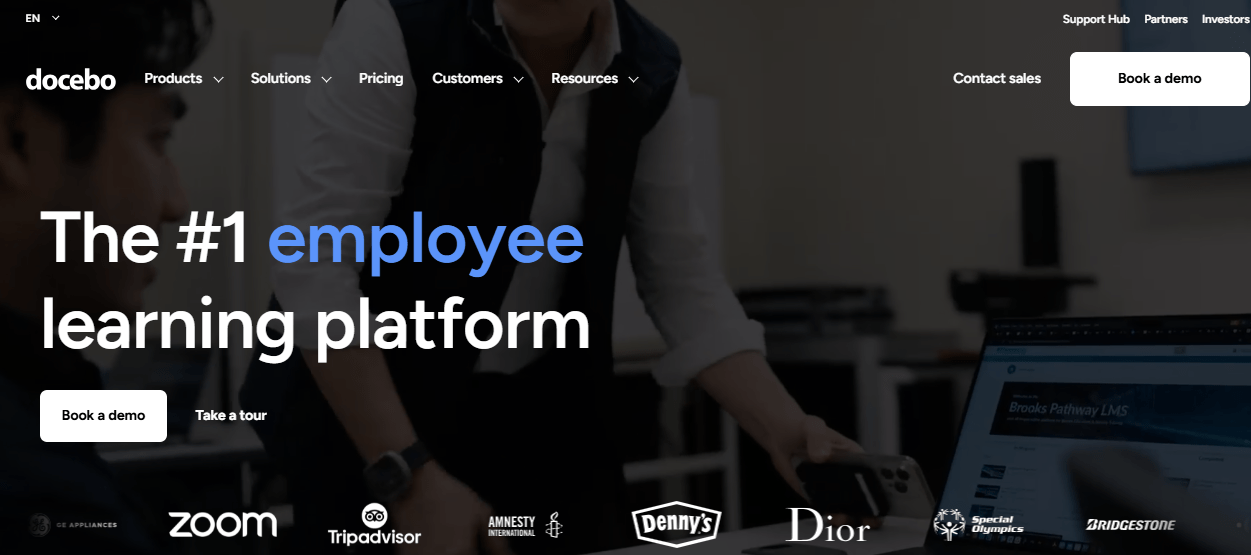
The multi-domain architecture, separate branded portals for employees, partners, and customers from one admin console, matters for regulated organizations training contractors and vendors alongside staff.
Booking.com and MidFirst Bank both run large-scale onboarding and compliance programs through it, and MidFirst has reported a measurable lift in compliance rates after switching. The cost of all this sophistication is setup time.
Docebo is not a platform you turn on Monday and run by Friday, and the newer AI credit system adds consumption-based pricing on top of the base license that some buyers find hard to predict.
Pros:
- Shape AI tool converts existing compliance documentation into structured microlearning quickly
- Multi-domain portals support training employees, partners, and external contractors separately from one platform
- Strong social and informal learning tools that some regulated industries use for peer-driven safety culture
- SOC 2, ISO 27001, and FedRAMP Moderate authorization for security-conscious buyers
Cons:
- Requires real investment in setup and admin training before it runs smoothly
- Newer AI credit pricing adds consumption-based costs on top of the base license, which some buyers find unpredictable
- Customer support ratings lag other categories on this list according to third-party review aggregators
Pricing: Custom, quote-based. Typical base licensing runs $25,000 to $40,000 per year before AI credits and add-on modules.
4. Absorb LMS – Best for AI-Automated Compliance Administration
Absorb’s pitch to regulated industries is automation of the parts nobody wants to do by hand: enrollment rules, recertification cycles, and audit-ready reporting that doesn’t require an administrator to stitch together three different exports.
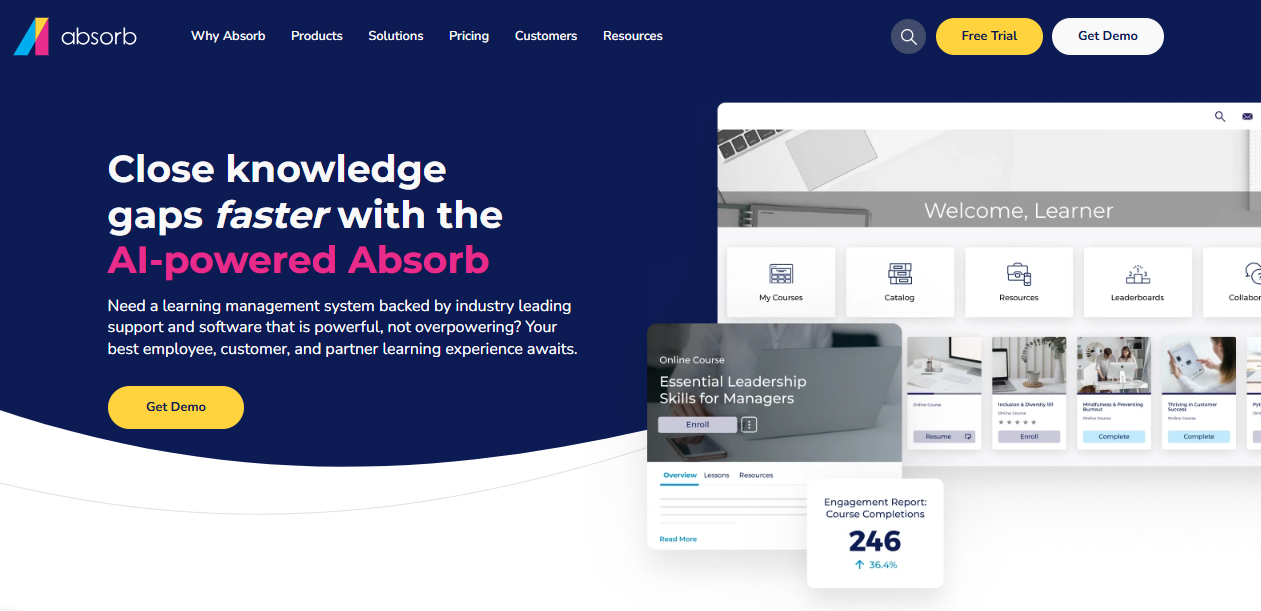
Its AI engine flags learners who are falling behind before a deadline turns into a violation, which is a genuinely different posture than platforms that just log the miss after it happens.
Healthcare and financial services buyers show up often in Absorb’s own case studies, and the built-in 21 CFR Part 11 electronic signature support is a specific, meaningful detail for pharma and med device teams.
Course completion is the number Absorb likes to point to, with some customers reporting jumps from roughly half to nearly ninety percent in the first quarter after switching over. The tradeoff is reporting depth. A few reviewers want more out of the box before reaching for the paid Analyze add-on.
Pros:
- AI-driven enrollment automation and at-risk learner flagging ahead of compliance deadlines
- 21 CFR Part 11 compliant e-signatures, relevant for pharma and medical device training records
- Intuitive admin and learner experience that reduces onboarding time for new administrators
- Strong customer support reputation across reviews
Cons:
- Deeper reporting and analytics often require the paid Analyze add-on
- No built-in way to archive old enrollment records that are no longer active but still needed for compliance history
Pricing: Custom, quote-based. No published starting price; quotes vary by learner count and modules selected.
5. SAP Litmos – Best for Prebuilt Regulatory Content Libraries
Litmos solves a specific problem: you need compliance courses on cybersecurity, harassment prevention, and data protection live this week, not after a six-month content build. The prebuilt library covers the regulatory basics that show up across healthcare, finance, and manufacturing, and the dynamic assignment engine routes the right course to the right role automatically.
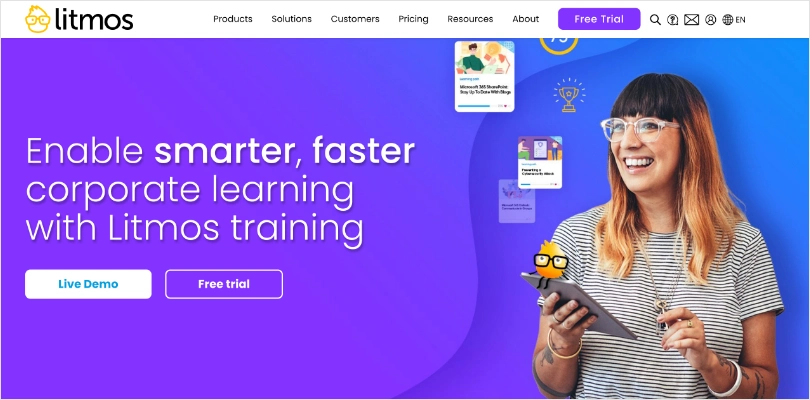
Litmos also states that its compliance collections get reviewed on an ongoing basis to account for regulatory and legislative changes, which matters if you don’t have in-house counsel checking course content line by line.
Where Litmos gets uncomfortable is the pricing structure once you scale past a few hundred learners. Per-active-user billing on the LMS plus a separate fee for the content library adds up fast, and buyers moving from 150 to 1,000 learners describe real sticker shock at renewal. It’s a strong fit if you have the headcount to justify it and want content over customization.
Pros:
- Large prebuilt regulatory content library covering cybersecurity, harassment, data protection, and industry-specific compliance topics
- Dynamic assignment engine auto-routes training based on role and learner attributes
- Native SAP SuccessFactors integration for organizations already on that ecosystem
- Fast deployment relative to enterprise competitors
Cons:
- Per-active-user pricing plus a separate content library fee makes costs climb quickly at scale
- Some users report the admin interface has a learning curve despite the polished learner side
- Scheduled or recurring training assignments require manual re-enrollment in some workflows
Pricing: Quote-based, typically $4 to $15 per learner per month depending on volume, with most contracts requiring a minimum of roughly 150 learners.
6. MedTrainer – Best for Healthcare-Specific Compliance and Credentialing
MedTrainer is built for one job: keeping a healthcare organization’s training, credentialing, and policy management in one place so a single administrator can run compliance without reconciling three separate systems.
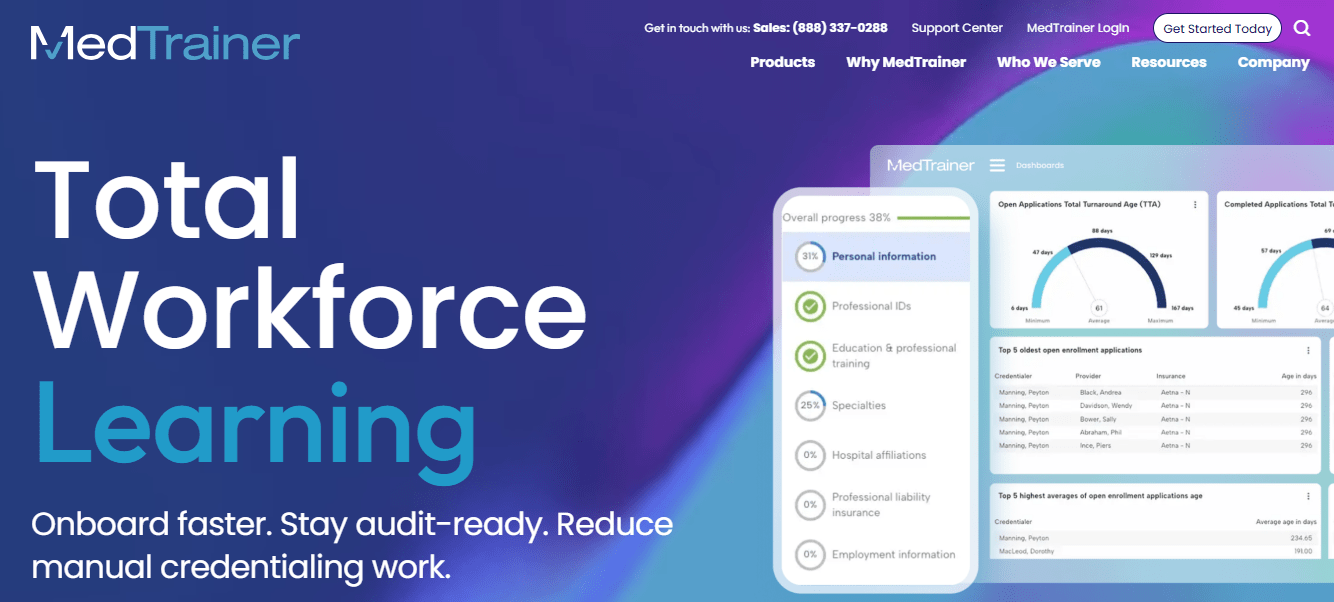
If your regulated industry LMS search is actually a healthcare compliance search, specifically HIPAA, OSHA, and CMS audit readiness, this is a more direct answer than a general-purpose platform will give you.
The automated license verification and exclusions monitoring modules are the standout, catching a lapsed license before it becomes a credentialing crisis. It currently serves several hundred thousand healthcare professionals across tens of thousands of facilities, and covers regulatory frameworks spanning HIPAA, OSHA, HRSA, TJC, CMS, OIG, CLIA, AAAHC, and CARF inside one system.
The platform serves smaller healthcare organizations well. Several reviewers running larger, multi-site operations report performance issues, including slow pages and course freezing during peak use.
Pros:
- Combines learning, credentialing, and policy management in one login, reducing administrative reconciliation
- Automated license and exclusions monitoring flags lapsed credentials before an audit finds them
- 350+ healthcare-specific courses covering HIPAA, OSHA, CMS, and long-term care topics
- Strong fit for small to mid-size healthcare organizations, which make up the majority of its reviewer base
Cons:
- Usability issues, including slow pages and course freezing, show up repeatedly in reviews from larger deployments
- No public pricing; every quote requires a sales conversation
- Support response times lag for some users, particularly outside business hours
Pricing: Custom, quote-based across three tiers, Select, Premier, and Signature, priced by licensed user count and module selection.
7. Relias – Best for Healthcare and Life Sciences Workforce Compliance
Relias is the platform I see named most often by long-term care, home health, and behavioral health organizations specifically. Its 1,500-plus accredited courses map directly to state and federal healthcare requirements through content crosswalks that save a compliance team from having to verify accreditation themselves.
For a healthcare-specific regulated industry LMS, that content depth is the actual differentiator.
Relias has grown through a string of acquisitions in recent years and earned recognition as a five-star provider on Newsweek’s 2026 Top Online Learning Providers list, which says something about content depth even where the day-to-day platform experience draws mixed reviews.
The reviews are more mixed than MedTrainer’s. Customer service and contract terms come up repeatedly as pain points, including complaints about being auto-renewed into contracts without clear notice. If you go this route, read the renewal terms before you sign, not after.
Pros:
- 1,500+ accredited healthcare courses with crosswalks to federal, state, and accreditor requirements
- Serves over 13,000 healthcare organizations, so the content stays current with regulatory changes at scale
- Management and learner-facing portals both purpose-built for healthcare workflows
- Recognized as a top-rated provider in independent healthcare learning platform rankings
Cons:
- Customer service ratings are noticeably lower than most other platforms on this list
- Contract and renewal terms draw repeated complaints in independent reviews
- Pricing is not transparent and requires a sales conversation to estimate real cost
Pricing: Custom, quote-based. Some published listings cite a $100 per-user reference rate, though actual enterprise contracts vary widely.
8. Vector LMS for Industrial (formerly Convergence LMS) – Best for Manufacturing and EHS Safety Compliance
This one started life as Convergence LMS, built specifically for manufacturing and industrial safety training, and its acquisition by Vector Solutions hasn’t changed what it’s good at. If your regulated industry LMS needs to handle MSHA, OSHA, and plant-specific safety certifications for a workforce that isn’t sitting at a desk all day, this is a narrower but sharper tool than the generalist enterprise platforms on this list.
Reviewers consistently praise the customer support, which matters more in industrial settings than almost anywhere else, because the person calling for help is often a plant trainer, not an IT department.
It’s a fit for mining, pulp and paper, general manufacturing, and similar sectors where the workforce needs mobile-friendly, plant-floor training rather than a desk-based learning portal, and where MSHA-specific content actually matters.
The bulk-versus-individual assignment tool has real friction, and reporting depth is lighter than what Docebo or Cornerstone offer.
Pros:
- Purpose-built for industrial and manufacturing safety compliance, including MSHA-specific training modules
- Consistently praised customer support and responsiveness, unusual for this rating volume
- Straightforward content upload and self-paced training tracking for plant-floor workforces
- Automated reporting for regulatory training schedules
Cons:
- Bulk versus individual training assignment workflow is confusing, according to multiple reviewers
- Reporting and analytics are lighter than enterprise-grade competitors
- Narrower industry focus means less flexibility if your organization spans regulated sectors beyond industrial and manufacturing
Pricing: Custom, quote-based; contact vendor for a plan sized to your facility count and workforce.
9. iSpring Learn – Best for Fast Setup on a Tight Compliance Budget
iSpring Learn is the answer for a compliance team that needs something running in days, not months, and doesn’t have six figures to spend getting there. Setup is genuinely fast, the interface has close to no learning curve for either administrators or learners, and the Supervisor Dashboard gives managers visibility into their team’s compliance status without needing admin access to the whole system.
It will not replace a Docebo or Cornerstone for a 10,000-person multinational, and it isn’t trying to. Buyers who land here often consider WorkRamp or Tovuti first, and the most common reason for switching is a simpler, more reasonably priced system with on-the-job training checklists already built in.
For a mid-size regulated employer that wants defensible completion records, automated enrollment, and a built-in knowledge base for storing SOPs, without the enterprise price tag, it earns a real spot on this list.
Pros:
- Fast implementation with minimal learning curve for admins and learners
- Supervisor Dashboard gives managers compliance visibility without full admin access
- Built-in knowledge base for storing SOPs and reference documentation alongside training
- Strong value-for-money ratings relative to enterprise competitors
Cons:
- Quiz reporting only shows the learner’s most recent attempt, not the full history, which complicates some audit requests
- Lacks the multi-domain, multi-portal architecture that larger, multi-audience organizations need
Pricing: Starts around $3.58 per user per month on annual billing; exact tiers depend on user count.
10. TalentLMS – Best for Lightweight, Right-Sized Compliance Tracking
TalentLMS is the platform I point smaller regulated employers toward when they’ve been quoted enterprise pricing for problems they don’t actually have. It handles the fundamentals, course assignment, certification tracking, automated reminders, cleanly, and the flat-rate pricing model means a finance or manufacturing team of 50 people isn’t paying per-learner fees that scale against them as headcount grows.
It already serves more than 70,000 teams worldwide, and active-user billing (you pay only for people who log in during a given month) helps organizations with seasonal or fluctuating training participation keep costs predictable.
It hits real limits past roughly 1,000 learners, and the reporting depth won’t satisfy a compliance officer who needs granular, multi-entity audit trails. For a lean team that needs a right-sized regulated industry LMS rather than a platform built for a Fortune 500 audit committee, it’s a legitimately good fit.
Pros:
- Flat-rate, published pricing, unusual transparency compared to most platforms on this list
- Free tier available for piloting before any sales conversation
- Clean, fast setup with minimal admin overhead
- Strong ease-of-use ratings across independent review platforms
Cons:
- Struggles to scale cleanly past roughly 1,000 active learners
- Reporting and audit trail depth are thinner than dedicated compliance-first platforms
- Fewer industry-specific compliance content templates than healthcare or industrial-focused competitors
Pricing: Starts at $149 per month flat rate (around $119 per month billed annually) for the Core plan; a free version is also available.
Which Are My Top 3 Picks for a Regulated Industry LMS?
If I had to narrow the best LMS for regulated industries down to three platforms most teams should actually shortlist, here’s where I’d land, and why.
1. ProProfs Training Maker is my first call for an enterprise compliance team that wants a large, ready-to-deploy course library and AI-driven reporting without the multi-month rollout that Cornerstone or Docebo typically require. It gets a large, multi-site regulated organization from a fragmented process to an actual audit trail fast.
2. MedTrainer is where I’d send a healthcare-specific buyer whose real problem is credentialing, not just course delivery. Combining license verification, exclusions monitoring, and training in one login solves a job that a generalist LMS genuinely doesn’t.
3. Docebo is the pick for a multinational regulated enterprise that needs to train employees, contractors, and partners across different countries and different compliance requirements from one system. The setup cost is real, but so is the ceiling on what the platform can handle once it’s configured.
How Did I Evaluate These Regulated Industry LMS Platforms?
I didn’t build this list off vendor homepages. Every rating you see came from Capterra and G2, and where the two disagreed, I tried to weigh the difference honestly rather than just reporting the star count.
Beyond ratings, when I looked at what actually makes the best LMS for regulated-industry compliance, I evaluated each platform by how its AI features are used, whether they genuinely accelerate compliance course creation or just generate marketing copy about doing so, and how much administrative burden the platform removes versus adds.
Ease of use gained real weight, too, because the best-rated regulated-industry LMS on paper is worthless if the compliance manager running it needs their own certification just to pull a report.
Specifically, I weighed:
- Audit trail depth: Can the platform produce a report that a regulator will actually accept without extra formatting work?
- Certification and expiry tracking: does it flag lapsing credentials automatically, or does someone have to remember to check?
- AI feature substance: Does the AI meaningfully reduce course-building time, or is it a chatbot bolted onto an old product?
- Ease of use: Can a compliance manager without dedicated IT support actually run this day to day?
- Pricing transparency and fit: Does the pricing model punish growth, or scale sensibly with headcount?
- Industry specificity: Does the platform understand the difference between generic corporate compliance and sector-specific requirements like HIPAA, GxP, or MSHA?
That’s the bar I used throughout: not which platform has the most reviews, but which ones actually earn a spot when you’re specifically hunting for the best LMS for compliance training in regulated industries.
What Should You Know Before Choosing a Regulated Industry LMS?
After going through dozens of these platforms, a few patterns kept showing up. The teams that ended up happy made these calls early. The teams that didn’t usually overlook them.
1. Don’t Sign Away Your Content Ownership
Most buyers don’t ask about this until it’s too late. If your compliance courses live only as compiled SCORM packages, you don’t actually own your training content. You own a black box that you can upload to an LMS and nothing else. When your contract renews at triple the price, or the vendor’s roadmap changes direction without you, migrating means rebuilding everything from scratch.
Before you sign anything, put one clause in writing: you get the raw source files, not just the compiled SCORM zip, for every course built for you, whether in-house or through an agency. It costs nothing to ask for this up front, and it can save months if you ever need to leave.
2. A Full LMS and a Compliance Tracking Layer Are Not the Same Purchase
A lot of regulated teams shop for a full-featured LMS when what they actually need is a learner tracking layer that logs completions, flags expirations, and produces a report. This is the question hiding behind many searches for the best LMS for regulated-industry compliance: are you buying a place to build courses, or a system of record for training that happens elsewhere? If your training content is mostly instructor-led, in-person, or already built by a specialized safety vendor, a full LMS with course authoring, gamification, and a content marketplace is paying for features you’ll never use.
Ask yourself that question honestly before you shop. The answer changes, which half of this list you should even be looking at.
3. The Best LMS for Compliance Training in Regulated Industries Still Won’t Fix the Boredom Problem
Here’s something that shows up constantly in community discussions and rarely in vendor pitches: employees turn their brains off during compliance modules and pass the quiz without absorbing anything they could apply on the job. That’s not a software problem you can buy your way out of, and no LMS, however well-rated, solves it alone.
What actually works is a hybrid split. Use the platform for declarative knowledge, the facts, policies, and regulations someone needs to know, and keep performance-based skills, the things someone needs to be able to do, in instructor-led or hands-on formats where a person can watch someone demonstrate competence. The platforms on this list, built with blended delivery in mind, ProProfs Training Maker, Docebo, and Vector LMS for Industrial, among them, handle this split better than the rest.
4. Price the ROI in Admin Hours, Not Just Subscription Cost
Compliance leaders keep comparing platforms on sticker price and missing the number that actually matters: how many admin hours does automation save every month? A system that costs twice as much but eliminates 15 hours a month of manually chasing signatures and re-enrolling lapsed learners has already paid for the difference by the second quarter.
Before you compare quotes, estimate the time you currently spend on manual reminders, re-enrollment, and chasing signatures in a single quarter. Multiply that by a fully loaded hourly rate. That number, not the subscription line item, is what you should actually be negotiating against.
5. Right-Size Before You Shop
The most expensive mistake in this category isn’t picking the wrong regulated industry LMS. It’s picking an enterprise platform sized for a company five times your headcount. Audit which features you actually use in your current system, if you have one, before renewing or switching. Most regulated teams use a fraction of what they’re paying for.
The biggest competitor to every platform on this list isn’t another platform. It’s the DIY stack: spreadsheets tracking completions, PowerPoint decks emailed around, a shared drive standing in for a knowledge base. If that’s where you are right now, almost anything on this list is an upgrade. The question is just which one fits the regulatory weight you’re actually carrying, not the weight a sales rep assumes you’re carrying.
A Quick Checklist for Finding the Best LMS for Regulated Industry Compliance
Run whatever platform you’re considering against this before you sign anything:
- Does it produce an audit-ready report without manual formatting?
- Does it track certification and license expiry automatically, with reminders?
- Do you own the raw source files for any courses built for you, not just the compiled package?
- Does the AI feature actually reduce course-building time, or is it decoration?
- Does the pricing model scale sensibly with your headcount, or punish growth?
- Does it support a hybrid model for skills that require in-person or hands-on assessment?
Stop Shopping for Features. Start Shopping for Defensibility.
Every platform on this list can deliver a course. What separates them, when it actually matters, is whether the records they produce hold up when someone outside your organization asks to see them. That’s the real test for a regulated industry LMS: not the demo, not the feature checklist, the moment an auditor, a regulator, or a new client’s compliance team asks for proof. Every platform here has a fair claim to being among the best LMS for regulated industries for someone, just not for everyone.
If you’re comparing options right now, start with what you’re actually solving: audit defensibility, content ownership, and admin hours saved, not just what looks impressive in a sales call. If you’re a small or mid-size regulated employer that wants a right-sized regulated industry LMS without enterprise pricing or a five-month implementation, ProProfs Training Maker is worth trying on the free plan before anything else.
Frequently Asked Questions
What is a regulated industry LMS?
A regulated industry LMS is a learning management system built to deliver, track, and document employee training in sectors where a regulator checks the results. It prioritizes audit trails, certification expiry tracking, and defensible records over course variety or gamification.
What is the best LMS for regulated industries in 2026?
ProProfs Training Maker, MedTrainer, and Docebo consistently stand out depending on your size and sector. ProProfs suits smaller teams needing fast, affordable compliance tracking. MedTrainer fits healthcare credentialing. Docebo fits multinational enterprises training employees, partners, and contractors together.
What features should a regulated industry LMS have?
Prioritize automated certification and expiry tracking, audit-ready reporting, role-based training assignment, SCORM support with content ownership, and AI features that genuinely reduce course-build time. Ease of use matters too; a compliance manager shouldn't need a certification just to pull a report.
How much does an LMS for regulated industries cost?
Pricing ranges widely. ProProfs Training Maker starts at $1.99 per active learner monthly. TalentLMS starts at $149 monthly flat rate. Enterprise platforms like Cornerstone and Docebo are quote-based, often $25,000 to $70,000 annually depending on scale.
What is the difference between a regulated industry LMS and a standard corporate LMS?
A standard corporate LMS optimizes for course variety and engagement. A regulated industry LMS optimizes for defensibility: audit trails that survive regulator scrutiny, certification tracking, and records that hold up months or years after training occurred.
Can a small healthcare or manufacturing company afford a regulated industry LMS?
Yes. Platforms like ProProfs Training Maker and iSpring Learn offer free or low-cost tiers built for smaller teams, while enterprise platforms like Cornerstone target large multinational organizations. Right-sizing your choice to headcount matters more than picking the biggest name.
Do I need a healthcare-specific LMS or a general regulated industry LMS?
If your primary need is credentialing, license verification, and healthcare-specific compliance content, a dedicated platform like MedTrainer or Relias fits better. If you need broader flexibility across departments, a broader platform like ProProfs Training Maker or Docebo works.
What is the best LMS for regulated industry compliance if I only need certification tracking, not full course building?
If you mainly need tracking rather than course creation, look at lighter systems like TalentLMS or Vector LMS for Industrial before paying for a full authoring-heavy platform. Match the purchase to whether you're building courses or logging completions from training that already exists elsewhere.
Is there a single best LMS for compliance training in regulated industries, or does it depend on my sector?
It depends heavily on sector. Healthcare buyers should weight MedTrainer and Relias more heavily. Manufacturing and industrial buyers should weight Vector LMS for Industrial. Cross-sector or smaller regulated teams are usually best served by ProProfs Training Maker.
Let ProProfs AI create your training course

 We'd love your feedback!
What did you like & how can we make it even better?
 Thanks for your feedback!
 Ask Your Question
Have a question? Get expert help to make your decision easier.